Uģis Krišjānis performs Vernacular Dances in Rīga, Latvia on March 27

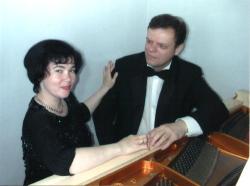
ugis.jpegPianist Uģis Krišjānis reprises his recent performance of my Vernacular Dances at Rīgas Latviešu biedrības nama Zelta zālē (Riga’s Society House, Golden Hall) on March 27 at 8PM.

Uģis Krišjānis is joined by musicians Jānis Rinkulis (cello), Kristaps Pētersons (electric guitar), Dzintars Vīksna (drums) on this concert called “NEPIERADINĀTS” (UNTAMED), including works by Gundega Šmite, Volfgangs Dārziņš, Gundaris Pone, Imants Zemzaris, Līga Celma, Uģis Krišjānis and Kristaps Pētersons. Tickets cost 2 Ls/1 Ls (Seniors, students).

Uģis Krišjānis performs Vernacular Dances in Rīga, Latvia on March 27 Read More »

From the Faraway Nearby at Palm Beach Atlantic University’s New Music Festival, March 13

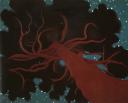
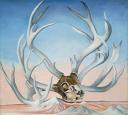
GastesiBezerraDuo The Piano Duo Gastesi-Bezerra will perform four movements from my suite of pieces for piano four-hands From the Faraway Nearby, inspired by paintings by Georgia O’Keeffe on March 13 at 7:30 PM at the New Music Festival at Palm Beach Atlantic University’s Vera Lea Rinker School of Music in West Palm Beach, Florida.

The duo will also perform music by Terry Winter Owens, Dennis Kam, Marlene Woodward-Cooper, Spanish-Basque composer Ramon Lazkano and Italian composer Danielle Corsi.

From the Faraway Nearby at Palm Beach Atlantic University’s New Music Festival, March 13 Read More »

Vernacular Dances included on the XVI International Piano Stars Festival in Liepāja, Latvia on March 12


Pianist Uģis Krišjānis will give the Latvian premiere of my Vernacular Dances on March 12 at the Liepāja Symphony Concert Hall (Graudu iela) at 7PM as part of the eight day XVI International Piano Stars Festival. The festival brings classical and jazz pianists this year from Brazil, Canada, Cuba, France, Germany, Latvia, Spain and Russia to perform concerti, chamber music and solo concerts. The solo concert of Uģis Krišjānis will also include works by Gundega Šmite, Volfgangs Dārziņš and Gundaris Pone.

Vernacular Dances included on the XVI International Piano Stars Festival in Liepāja, Latvia on March 12 Read More »

Chamber works on Latvia’s New Music Days festival in Riga on February 8 & 18

The piano duo Antra and Normunds Viksne will perform three movements from my suite for piano four-hands inspired by paintings by Georgia O’Keeffe, From the Faraway Nearby, at Rīgas Latviešu biedrības nama Zelta zālē (Riga’s Society House, Golden Hall) on February 8 at 7PM. This concert of chamber music will also include works by Latvian composers Kalniņš, Kalsons, Ābols, Jermaks, and Riekstiņš.
ljmd.jpg
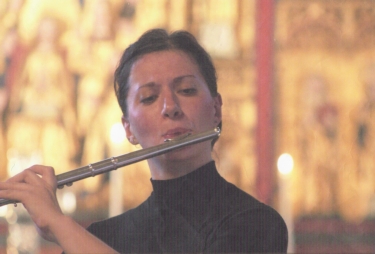
Flutist Liene Denisjuka will perform my Fragmentary Rondo for unaccompanied solo flute on a concert of electroacoustic and chamber music at the Jaunais Rīgas Teātris Kamerzālē in Rīga on February 18 at 7PM. Other composers on this program include Ēriks Ešenvalds, Rolands Kronlaks, Solveiga Selga, and Anita Mieze.

These concerts are just two of eleven concerts that will take place throughout Riga in February.

Chamber works on Latvia’s New Music Days festival in Riga on February 8 & 18 Read More »

From the Faraway Nearby in Serbia, December 28 & 29

GastesiBezerraDuo The Piano Duo Gastesi-Bezerra will perform four movements from my suite of pieces for piano four-hands From the Faraway Nearby, inspired by paintings by Georgia O’Keeffe on December 28 – 8PM at the Studentski Kulturni Centar in Belgrade, Serbia and on December 29 – 7 PM at Novi Sad’s City Hall in Novi Sad, Serbia.

Both programs will include twelve premieres in Serbia. Among them, works by Dimitri Cervo, Carme Fernández-Vidal, Charles Griffin, Piotr Lachert, Terry Winter Owens, Justin Rubin, Rodolfo Coelho de Souza, Ricardo Tacuchian, Tim Thompson , and Marlene Woodward-Cooper. They will also be playing works by distinguished Serbian composer Vladimir Tosic.

From the Faraway Nearby in Serbia, December 28 & 29 Read More »

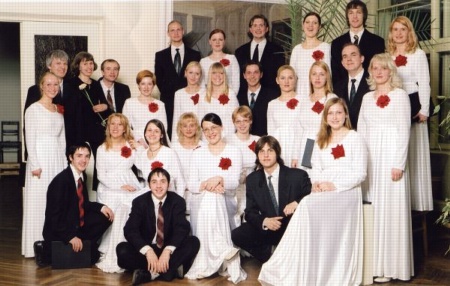
Intis Choir performs Aijā, ŽūŽū in Liepāja, Latvia on December 15


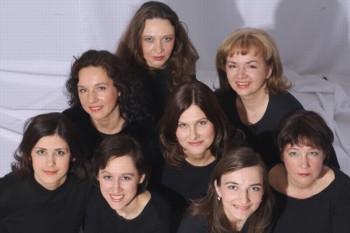
The Chamber Choir Intis, directed by Ilze Valce, will perform my Aijā, ŽūŽū at Liepājas Latviešu Biedrības Nama, Lielajā zāle at Rožu laukumā 5/6 (The Great Hall of the Latvian Society House) on December 15 at 4PM, as part of their 20th Anniversary celebration concert. This will be the first public performance of the piece, and the composer will accompany the choir at the piano.

Intis Choir performs Aijā, ŽūŽū in Liepāja, Latvia on December 15 Read More »

Ana Cervantes plays Murmuring in Comala in Morelia and Guadalajara, MX, December 8 & 12

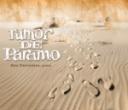
Rumor de ParamoPianist Ana Cervantes will perform selections from Rumor de Páramo, a 2-disc recording and commissioning project celebrating the work of Mexican author Juan Rulfo in Morelia (in the state of Michoacán), Mexico on Saturday, December 8 at 8PM, at el Museo de Arte Colonial; and on December 12 at 7PM at la Capilla Tolsá del Instituto Cultural Cabañas in Guadalajara (in the state of Jalisco), Mexico.

The concerts will include my Murmuring in Comala, as well as works by Laurie Altman (US, 1946); Paul Barker (RU, 1956); Silvia Berg (Brasil-Dinamarca, 1958); Joaquín Gutiérrez Heras (México, 1927); Federico Ibarra (México, 1946); Anne LeBaron (EUA, 1953); Arturo Márquez (México, 1950); Ramón Montes de Oca (México, 1953-2006); Alex Shapiro (US, 1962); and Horacio Uribe (México, 1970).

Ana Cervantes plays Murmuring in Comala in Morelia and Guadalajara, MX, December 8 & 12 Read More »

Sky Above Clouds in Nice, France on December 7

index.JPGThe Germany-based piano duo Francis Gailus and Sana Villeruša will take the Sky Above Clouds movement from my suite for piano 4-hands, From the Faraway Nearby, to the Valberg 2ème Concours International du Mercantour/Piano à quatre mains in Nice, France, on December 7. The competition will take place at L’École Départementale de Musique des Alpes-Maritimes, Cité des Moulins, 38 Rue de la Santoline in Nice. Bon voyage et bonne chance.

Sky Above Clouds in Nice, France on December 7 Read More »

Weaving Olden Dances performed by the Griffin Ensemble in Liepāja, Latvia on December 4

griffin_ens.jpg

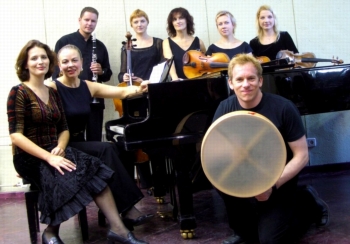
The Griffin Ensemble will perform my Weaving Olden Dances, a work based on traditional Irish and Appalachian music and scored for Clarinet, String Quartet, Piano and Bodhrán on December 4 at Liepājas Biedribas Nams (Liepāja’s Society House) at 5PM, as part of a concert in honor of the 70th Birthday of local artist Irina Ture. Several of the musicians in the ensemble, as well as others performing on the concert, have all been the subjects of Ture’s photographic portraits, many of which are currently on exhibition in the hall.

Weaving Olden Dances performed by the Griffin Ensemble in Liepāja, Latvia on December 4 Read More »

U of Michigan Percussion Ensemble performs The Persistence of Past Chemistries on December 2

On Sunday December 2, 2007 at 3PM at the McIntosh Theatre of the University of Michigan, The University of Michigan Percussion Ensemble, directed by Joe Gramley, will present their semester-end concert called American Tradition and Innovation, featuring seminal works that demonstrate the twentieth-century rise of percussion as a chamber-music art as well as the ever-more-global focus of American classical percussion in our time. Along with three works by John Cage and Lou Harrison that brought an array of never-before-heard instruments from around the world to the American stage, the Ensemble will perform a rock etude (co-written by Michigan’s own Michael Udow) that marries American percussion and the modern marimba to a range of vocal traditions spanning several continents. The program is rounded out with two other unique pieces: Steve Reich’s minimalist composition “Six Marimbas” and Charles Griffin’s “The Persistence of Past Chemistries,” written entirely for wood instruments.

PROGRAM: Cage/Harrison – Double Music; Cage – Third Construction;
Harrison – Concerto for Violin with Percussion Orchestra;
Udow/Douglas – Rock Etude No. 7;
Reich – Six Marimbas;
Griffin – The Persistence of Past Chemistries.

Free – no tickets required

U of Michigan Percussion Ensemble performs The Persistence of Past Chemistries on December 2 Read More »

Percussia performs Kusanganisa in New York on December 2

calendarmenubottom.jpgFlutist Margaret Lancaster joins Ingrid Gordon’s ensemble Percussia, for an eclectic flute and percussion program featuring Asian and African compositions, my Kusanganisa (Mixing, for flute and marimba 4-hands, based in part on Zimbabwean mbira patterns), as well as other contemporary classical works.

The concert will take place on December 02 at 2:00 PM at the Hart Memorial Library in Shrub Oak, New York. Admission is free.

Percussia performs Kusanganisa in New York on December 2 Read More »

Flutist Liene Denisjuka performs Fragmentary Rondo in Riga November 24

Liene Denisjuka will include my Fragmentary Rondo for unaccompanied solo flute on her concert of solo and chamber works at Rīgas Latviešu Biedrības Zālē (The Latvian Society Hall) at 7PM on November 24 in Riga.She will be joined by Liene Neija-Kalniņa (Violin) and Kristīne Paula (Piano). Other composers on the program include Artūrs Grīnups, Pēteris Vasks, Lowell Lieberman and Ian Clarke.

Flutist Liene Denisjuka performs Fragmentary Rondo in Riga November 24 Read More »

Gastesi-Bezerra Duo perform From the Faraway Nearby on Florida’s Anna Maria Island November 23

GastesiBezerraDuo The Piano Duo Gastesi-Bezerra will be performing selections from my suite of pieces for piano four-hands From the Faraway Nearby, inspired by paintings by Georgia O’Keeffe at Gloria Dei Lutheran Church on Florida’s Anna Maria Island on Friday, November 23 at 3:00 p.m. Other composers on the program include Mozart and Debussy, plus contemporary duets by Marlene Woodward-Cooper (Deceptions), and Ronaldo Miranda (Variações Sérias).

Gastesi-Bezerra’s upcoming season will take them to Las Vegas, Washington D.C., Miami and Gainesville, and a tour of Serbia in December and of Brazil in June 2008.

Gastesi-Bezerra Duo perform From the Faraway Nearby on Florida’s Anna Maria Island November 23 Read More »

Panta Rei (Saxophone Quartet or Clarinet Quartet)

Saxophone Quartet or Clarinet Quartet (1997, rev. 2007) One movement, ca. 8’
Premiered by the Amherst Saxophone Quartet in Buffalo, New York.

“The other premiere was Charles Griffin’s Panta Rei, a pulsing, fast, free-flowing piece of tight, dense textures and few open spaces, save for an island of rather uneasy repose in the middle.” – The Buffalo News (9/19/99)

Here’s a video of Quattro Differente, from their recent performance at Rigas Jaunais Teatris in Riga, Latvia:

Program Note:

Panta Rei is a Greek expression attributed to Heraclitus, a philosopher who lived from 536 to 470 BC. The expression is meant to capture the experience of the flow of time. He argued that “One cannot step into the same stream twice, for other waters and yet others go ever flowing on;” that everything is constantly changing, from the smallest grain of sand to the stars in the sky. This description is also appropriate for a great deal of music, the art form most dependent on the flow of time and our experience of that flow. I came upon this quote and the idea for this piece after reading James Gleick’s “Chaos: Making a New Science.”

Panta Rei (Saxophone Quartet or Clarinet Quartet) Read More »

Putni performs El Paso de la Seguiriya in Riga, November 23

The women’s vocal ensemble Putni will give a repeat performance of my El Paso de la Seguiriya, a brand new setting of the poetry of Federico Garcia Lorca, on Friday, November 23 at 7PM at The Dome Cathedral of Riga, located at 1 Dome Square (Doma laukums 1) in Riga as part of their program Music in the Cathedral (Mūzika katedrālē).

Commissioned with funds from the Latvian Culture Capital Fund and having grown out of some workshops I had created for Putni last year that included an introduction to flamenco, the piece includes a substantial amount of clapping in the flamenco style where the two parts interlock, called the palmas and contrapalmas.

Putni performs El Paso de la Seguiriya in Riga, November 23 Read More »

Viksnes Piano Duo perform From the Faraway Nearby in Riga on November 16

foto.jpgThe piano duo Antra and Normunds Viksne will give a repeat perfomance of their program War and Peace, which includes the entire suite of my piano four-hand work inspired by paintings by Georgia O’Keeffe From the Faraway Nearby at the Bolderāja School of Music and Art in Riga (31 Stūrmaņu Street) on November 16 at 5PM. The other composers on the program are Juris Ābols, Arvo Pärt, and Arthur Benjamin.

Viksnes Piano Duo perform From the Faraway Nearby in Riga on November 16 Read More »

Ana Cervantes plays Murmuring in Comala at UT Dallas on November 9

Rumor de ParamoPianist Ana Cervantes returns to the University of Texas at Dallas, where on Saturday 9 November she will perform the US premiere of 6 pieces from Rumor de Páramo: pieces of Mexican composers Georgina Derbez and Federico Ibarra; of US composers Anne LeBaron and Charles Griffin (my Murmuring in Comala); and England’s Stephen McNeff. And there Hill be a sneak preview of two pieces from her forthcoming CD Solo Rumores –Volume 2 of the Project, to be released 29 November in Mexico City– works by Mexican composers Arturo Márquez and Juan Fernando Durán .

Cervantes appears in Dallas as part of the 30th anniversary Congress of ALTA (the American Literary Translators Association); her concert will take place after a homage to Margaret Sayers Peden and Gregory Rabassa, distinguished translators from Spanish to English of masterpieces like Pedro Páramo of Juan Rulfo and One Hundred Years of Solitude of Gabriel García Márquez, among many other works.

During her stay at UTD Cervantes will interact with Humanities students through some of her famous “concert-conversations” and teach master classes.

Ana Cervantes plays Murmuring in Comala at UT Dallas on November 9 Read More »

Moon of the Floating World performed by Cantala Women’s Choir on October 27

cantata.jpgThe Cantala Women’s Choir of the Lawrence University Conservatory of Music will perform my The Moon of the Floating World, an a cappella setting for women’s voices in eight parts of a haiku by Ihara Saikaku (1642-1693). The theme of the concert is Dusk to Dawn and will be conducted by Richard Bjella and Phillip A. Swan in the Lawrence Memorial Chapel at Lawrence University in Appleton, Wisconsin on October 27 at 8PM.

Moon of the Floating World performed by Cantala Women’s Choir on October 27 Read More »

Shifting Coastlines (Medium High Voice and Piano)

Medium High Voice and Piano. (2000/2007) 20’
Texts by Charles Simic; (John Sokol); Ralph Burns; Howard Nemerov; Albert Goldbarth; Ronald Wallace


In 2000, inspired by our mutual love of science, the amazing artist Karen Fitzgerald and I collaborated on a project funded by the Greenwall Foundation and the Queens Community Arts Fund. We chose six poems by living authors that address the human condition through natural and scientific imagery. I composed six songs for the Goliard Ensemble: solo voice, flute, violin, cello, piano and percussion; Karen created six 60” paintings. The work premiered in October, 2000 at the Steinway Reformed Church, Astoria, NYC. These six round paintings were paired back-to-back and suspended above the audience. The project toured six South-East states during the Fall of 2000.

These pieces are very close to my heart, and over the past year, in my spare time, I revisited, revised and re-arranged five of them, paring it all down to a work for voice and piano in the hopes of making them more easily available for wider performance. Stylistically, the songs live in a place where art song, music theater and pop song overlap. Please email me if you are interested in seeing scores. (At some point I may take care of the sixth song, John Sokol’s Thoughts Near the Close of the Millenium, but not right now.)

Drawing the Triangle / Oleander Hawk:

oleanderhawk_sm.jpgDrawing the Triangle — Charles Simic

I reserve the triangle
For the wee hours,
The chigger-sized hours.

I like how it starts out
And never gets there.
I like how it starts out.
In the meantime, the bedroom window
Reflecting the owlish aspect
Of the face and the interior.

One hopes for tangents
Surreptitiously in attendance
Despite the rigors of the absolute.

Stars / Pearl:

pearl_sm.jpg
Stars — Ralph Burns

I sit and rock my son to sleep. It rains
and rains. Such as we are both asleep,
we swim past the stars,
bad stars of disaster, good stars of the backbone of night.

We know these stars as they are
and as we’d wish them to be, Milky Way,
Dog and Bear, hydrogen and helium, the 92
elements which make all we know of beauty.

We know nothing of angular size or
the inverse square law of the propagation
of light, and swim through a cold, thin
gas, between and among the stars,

which swim likewise between two creations
like children who know sleep intimately.

Figures of Thought / Triton:

triton_sm.jpg
Figures of Thought — Howard Nemerov

To lay the logarithmic spiral on
Sea-shell and leaf alike, and see it fit,
To watch the same idea work itself out
In the fighter pilot’s steepening, tightening turn
Onto his target, setting up the kill,
And in the flight of certain wall-eyed bugs
Who cannot see to fly straight into death
But have to cast their sidelong glance at it
And come but cranking to the candle’s flame —

How secret that is, and how privileged
One feels to find the same necessity
Ciphered in forms diverse and otherwise
Without kinship — that is the beautiful
In Nature as in art, not obvious,
Not inaccessible, but just between.

It may diminish some of our dry delight
To wonder if everything we are and do
Lies subject to some little law like that;
Hidden in nature, but not deeply so.

The Sciences Sing a Lullabye / Treetops

treetops_sm.jpg
The Sciences Sing a Lullabye — Albert Goldbarth
Physics says: go to sleep. Of course
you’re tired. Every atom in you
has been dancing the shimmy in silver shoes
nonstop from mitosis to now.
Quit tapping your feet. They’ll dance
inside themselves without you. Go to sleep.
Geology says: it will be alright. Slow inch
by inch America is giving itself
to the ocean. Go to sleep. Let darkness
lap at your sides. Give darkness and inch.
You aren’t alone. All the continents used to be
one body. You aren’t alone. Go to sleep.
Astronomy says: the sun will rise tomorrow,
Zoology says: on rainbow-fish and lithe gazelle,
Psychology says: but first it has to be night, so
Biology says: the body-clocks are stopped all over town
and
History says: here are the blankets, layer on layer, down on down.

Love’s Discrete Nonlinearity / Rubythroat:

rubythroat_sm.jpg
Love’s Discrete Nonlinearity — Ronald Wallace, from Chaos Theory

No heart’s desire is repeatable, or,
therefore, predictable. If a few hungry foxes
gorge on a large population of rabbits,
the population of foxes increases
while that of the rabbits declines,
until some point of equilibrium is passed
and the foxes begin to vanish with
the depleted supply of rabbits, and then
the rabbits multiply, like rabbits. And so on.
The ebb and flow of desire and fulfillment
is a story as old as the world. So,
if I loved you, finally, too much, until
you began to disappear, and I followed,
would you theoretically return to love
repeatedly again? There are forces so small
in our story of foxes and rabbits
no Malthus could ever account for them.
Whole species daily disappear, intractable
as weather. Or think of a continent’s
coastlines, their unmeasurable eddies
and whorls: infinite longings inscribed
by finite space and time,
the heart’s intricate branchings.

Thoughts near the Close of the Millennium / Burning Bush (not complete)

burningbush_sm.jpg
Thoughts near the Close of the Millennium — John Sokol

In this expanding universe, everything is leaving everything,
yet there is no center
From which any of this leave-taking leaves; the middle
of every departure
Is everywhere. Microcosmically viewed, it all looks a lot like
the pores of Dizzy Gillespie’s cheeks
When he blew his horn. We’re spinning away from the sun
and the stars
While Ceres moves away from Jupiter and Neptune moves
away from Mars.
Everything is leaving its immediate neighborhood, gathering
more and more distance
For itself, like the furthest quasar, that — 18 billion years ago —
said goodbye to Proxima Centauri.
Even Nancy down the street is leaving Charlie and the kids. Like
everything else,
We’re forever blown away by that first Big Bang. We’re stuck
in the atmospheric saddle
Of a slow-motion explosion, like that one at the end of Antonioni’s
Zabriskie Point,
Where that floating olive might be the earth, and if we slow down
the slow-motion (slow it,
Geometrically, down), we can witness that olive decomposing
and watch entropy eat it up
While we consider that all those little anatomizing volcanoes and
Olive-quakes of it
Might be comparable to the shifting and colliding of continents
which have slow-danced
To the music of the spheres for billions of summer nights, crashing
their own weddings
And feasting off each other’s tectonic plates until the next big bash:
all of which is just the drop-of-an-olive
In a martini glass compared to what it would take to understand
what I’m talking about
Is the energy that is the black hole of me that sucked this martini
so dry that no light exists,
And now the pimento of that olive is the pit of my stomach
which seems to have multiplied
In density a thousand-fold, like a pellet of buckshot become
shot-put,
Or maybe, like — at the core of a white dwarf — that teaspoon
of matter that weighs five tons.
So maybe all this wonder and worry — and all this speculation —
is futile, because, here it is,
New Year’s Eve again and I don’t think I need to overstate my point.

Shifting Coastlines (Medium High Voice and Piano) Read More »

Set fire to have light performed by the Madison String Quartet, October 14 & 15

photo.jpgThe New Jersey-based Madison String Quartet will perform my Set fire to have light on a program called New Worlds, along with works by Arcangel Castillo Olivari and Antonín Dvořák on Sunday October 14 at 3PM at St. Bernards Episcopal Church in Bernardsville, New Jersey. They will repeat the program the following afternoon at 1PM at the Bernards Township Library in Basking Ridge, New Jersey, as part of their Leisure Learning Series.

Set fire to have light performed by the Madison String Quartet, October 14 & 15 Read More »

From the Faraway Nearby in the Autumn Chamber Music Festival, October 12

tete-a-tete-mazs.jpg The piano duo Antra and Normunds Viksne is performing the entire suite of my piano four-hand work From the Faraway Nearby as part of the Fall Chamber Music Festival (a 10-day, annual festival in Riga and its environs of some 20 concerts featuring some of the best musicians from Latvia, Lithuania and Estonia) on October 12 at 7PM at the Valmiera Music School in Valmiera, Latvia. The other composers on the program are Juris Abols, Arvo Part, and Arthur Benjamin.

From the Faraway Nearby in the Autumn Chamber Music Festival, October 12 Read More »

Putni premieres El Paso de la Seguiriya in Riga, October 7

The women’s vocal ensemble Putni will premiere my El Paso de la Seguiriya, a brand new setting of the poetry of Federico Garcia Lorca, on Sunday, October 7 at 2PM at the Latvian History Museum, located at 3 Castle Square (Pils laukums 3) in Riga.

Commissioned with funds from the Latvian Culture Capital Fund and having grown out of some workshops I had created for Putni last year that included an introduction to flamenco, the piece includes a substantial amount of clapping in the flamenco style where the two parts interlock, called the palmas and contrapalmas.

Putni premieres El Paso de la Seguiriya in Riga, October 7 Read More »

Job Season (Shoot Me NOW!), CV and Teaching Philosophy

I haven’t written a pure blog entry in a long time… It’s been mostly concert announcements and the like. But it’s Academic Job Season again. Which makes me think of the Abbott and Costello “Who’s on first?” variation from the old Bugs Bunny cartoon where Elmer Fudd (who is hunting rabbits specifically) has both Bugs Bunny and Daffy Duck cornered with his gun, and Bugs gets Daffy to insist on getting himself shot.

rabbit-seasoning-mm.jpg

Bugs: It’s true, Doc; I’m a rabbit alright. Would you like to shoot me now or wait ’til you get home?
Daffy: Shoot him now! Shoot him now!
Bugs: You keep outta this! He doesn’t have to shoot you now!
Daffy: He does so have to shoot me now! [to Elmer] I demand that you shoot me now!
[Elmer raises his gun. As Daffy sticks his tongue out at Bugs, he is shot. Daffy walks back over to Bugs, gunsmoke pouring out of his nostrils]
Daffy: [to Bugs] Let’s run through that again.
Bugs: Okay.
Bugs: [deadpan] Would you like to shoot me now or wait till you get home.
Daffy:[similarly] Shoot him now, shoot him now.
Bugs: [as before] You keep outta this, he doesn’t have to shoot you now.
Daffy Duck: [re-animated] Hah! That’s it! Hold it right there! [to audience] Pronoun trouble. [to Bugs] It’s not “he doesn’t have to shoot you now”, it’s “he doesn’t have to shoot me now”
[Pause]
Daffy: [angrily] Well, I say he does have to shoot me now!! [to Elmer] So shoot me now!
[Elmer shoots Daffy again]

Anyway. That’s close to how I feel about applying for academic positions. But I just retooled my Curriculum Vitae, and created a teaching philosophy statement. I would very much appreciate constructive feedback on either one. I hope the Teaching Philosophy doesn’t come across as the same old, same old pablum.

While I’m at it, I wonder if anyone out there who has been or chaired a search committee might care to illuminate the process by commenting on their experience(s)? I have only taught adjunct, so I’ve never been on one. In the last three years, I have made it to the interview stage three times. The first time, someone with a choral conducting qualification got the job over me, because conducting was entailed. The second time, they broke the position into multiple adjunct posts in the end. The third time I was painfully nervous during the sample lessons I gave, and they gave the position to an internal adjunct candidate.

But I would love to know a few things, the most obvious being what makes one person’s CV float to the top of the candidate pile?

But also random things about the process that sometimes contribute to it feeling like a hassle, like:
• Why do committees ask for things that will make the entire applicant pool spend money on something like official transcripts, videos of teaching, CDs or scores, etc., rather than waiting to reduce the pool to, say, 10 candidates?
• After just reducing the size of my CV from 8 pages to 5 (primarily by winnowing my complete list of works down to commissioned works only), I see a vacancy announcement specifying a desire to see a complete list of works. Why?
• As for letters of recommendation, which is more important, the content of the recommendation or the name-recognition of the referee?
• How important is it to see a cover letter truly tailored to the school to which it’s sent?

Teaching philosophy

As a classroom educator, I model myself on a combination of several professors whom I have been fortunate to know. Teaching effectively requires flexibility, patience, humility, inquisitiveness, humor and creativity. I strive to be clear and methodical in my presentation, to keep the path between the specific and the general visible, and to individualize the learning experience as much as possible. Mistakes should be embraced as instructional opportunities. I strive to bring into the conversation about music ideas from other disciplines such as history, the sciences or psychology, in order to create multiple inroads to understanding for my students, but also to introduce them to the notion that an embracing open-mindedness to disciplines outside of music will help them become better musicians and critical thinkers. As much as possible, I try to treat the classroom as a laboratory environment for my students, where they learn by doing, by being active rather than passive.

When giving composition instruction (in addition to listening, score study, and reading), I follow an excellent model for discussion I learned when participating in a workshop at New Dramatists in New York City, led by Ben Krywosz. He learned it originally from the field of dance, but applied it here to an intensive workshop on collaboration between composers and playwrights/lyricists. There were five composers and five lyricists (and five singers plus an accompanist). We had to produce a lot of collaborative work, and every other day, we would come together and the performers would read through the pieces. When it was time to critique each other’s work, we followed a very specific five-step model for the discussions:

1. Say something positive. This forces us out of our typical reflex reaction, which is to find faults or something we would change had we been one of the authors. A lot of good-faith effort went into the attempt to create something artistic. It shouldn’t be too hard to find something positive to say.
2. You can ask them questions about the work, but not one that couches a negative opinion (like “How dare you?”). An example might be “What inspired you to evoke that image in the text?” or “What was the mood you were hoping to achieve?”
3. The author(s) can ask us questions. They might ask “Did that tempo work for you?” or “Could you understand the text in that vocal register?” etc. Truthfully, we as creators tend to have a sense about what is working well and what isn’t, and this provides an opportunity for the creator(s) to voice their own concerns. This can also preempt some of the content in the next step.
4. Opinion. This is the time we can present the negative aspects of our larger reception of the work. Here, whatever remaining technical or aesthetic issues can be addressed. All creative artists feel a certain emotional vulnerability that accompanies putting one’s work before other people. After steps one through three, that vulnerability has diminished, and leads to an ability to receive these opinions rationally and constructively.
5. Big picture. Here we examine the issues brought up in the discussion and determine if any are relevant to the discipline as a whole.

Perhaps one of the most important reasons I appreciate this model is the respect it accords people in their artistic efforts. I have found it useful when speaking with composition students, performers, or colleagues alike.

Job Season (Shoot Me NOW!), CV and Teaching Philosophy Read More »

Andrea Ceccomori plays Fragmentary Rondo with LICA, September 25

The Long Island Composers Alliance hosts a performance by the Italian flutist Andrea Ceccomori and Bulgarian pianist Elitza Harbova on Tuesday, September 25 at 7:00 PM at the Hewlett-Woodmere Library (1125 Broadway in Hewlett – Tel: 516-374-1667).

After Andrea gave the Italian premiere of my Fragmentary Rondo at the Goethe Institute in Rome, I connected him to the Long Island Composers Alliance, and this concert is the result of that collaboration. In addition to performing my solo work on this concert, other works for solo flute or flute with piano accompaniment will be included by LICA composers Jay Anthony Gach, Julie Mandel, Dana Richardson, Herbert Rothgarber and Margaret Collins Stoop.

Andrea Ceccomori plays Fragmentary Rondo with LICA, September 25 Read More »

Piano Duo Gastesi-Bezerra at the International New Music Festival, September 29

GastesiBezerraDuo The Piano Duo Gastesi-Bezerra will be performing four of the six movements of my From the Faraway Nearby for piano four-hands at the College of Southern Nevada’s 6th International New Music Festival in Las Vegas. Their recital will take place at the Cheyenne Campus on Saturday, Sep. 29 at 4:00 p.m. The rest of the program will be include The Holy Fool by Symeon Waseen, Amalo Mio by Piotr Lachert, À Rebours by Justin Rubin, Tacomarraco by Carme Fernández-Vidal, and Deceptions by Marlene Woodward-Cooper.

Piano Duo Gastesi-Bezerra at the International New Music Festival, September 29 Read More »

In Q to perform Kusanganisa at Hofstra, September 16

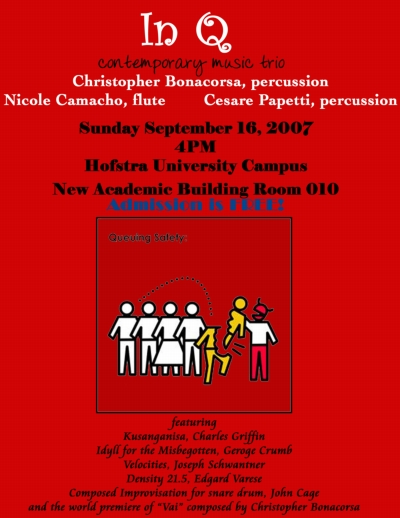
In Q, the new music trio (flutist Nicole Camacho, with Chris Bonacorsa and Cesare Papetti on percussion) will perform my Kusanganisa for flute and marimba four-hands at Hofstra University on September 16 at 4 PM.

Other works on the program are Idyll for the Misbegotten by George Crumb, Vai by Chris Bonacorsa, Velocities by Joseph Schwantner, Density 21.5 by Edgard Varese, and Composed Improvisation for Snare Drum by John Cage.

Room 010 in the New Academic Building. Admission is free.
inq.jpg

In Q to perform Kusanganisa at Hofstra, September 16 Read More »

Duo Stephanie Ho and Saar Ahuvia at Cornelia Street, September 10

saar-ho duo

The piano duo Stephanie Ho and Saar Ahuvia are kicking off the season with a guest performance at Cornelia Street Cafe in New York’s Greenwich Village as part of the Composer’s Collaborative Serial Underground Music Festival. They will perform selected movements from my From the Faraway Nearby for piano four-hands, as well as Conlon Nancarrow’s Sonatina.

Monday, September 10, 8:30 PM

Cornelia Street Cafe
29 Cornelia Street
(bet. 6th and 7th Ave)
New York, New York
Tel: (212) 663 1967

Duo Stephanie Ho and Saar Ahuvia at Cornelia Street, September 10 Read More »

Quattro Differente to perform Panta Rei in Rīga on September 10

qd
The Rīga-based clarinet quartet Quattro Differente (Guntars Gedroics, Kristaps Kitners, Marina Vidmonte & Ceslavs Grods) will include my Panta Rei on their concert at the Jaunais Rīgas Teātris in Rīga, Latvia, on Monday, September 10th at 7PM.

Panta Rei, originally an 8-minute work for saxophone quartet, was premiered by the Amherst Saxophone Quartet in Buffalo, New York. Quattro Differente premiered an earlier version of the piece in Ogre, Latvia, last year.

Also on the program will be works by Nick Gotham (Up From Under/Uzniršana), Jēkabs Nīmanis (Episodes), Santa Ratniece (Septiņi Pakāpieni), Jānis Dūda (Intermezzo), Edgars Raginskis (Asteriona nams), Austra Savicka (About Time), and Imants Mežaraups (Sfinksa).

Quattro Differente to perform Panta Rei in Rīga on September 10 Read More »

Die Freudenkrone at VI International Organ Music Festival, September 8, 2007

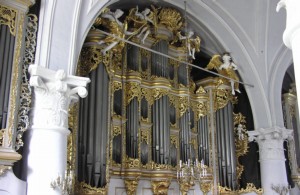
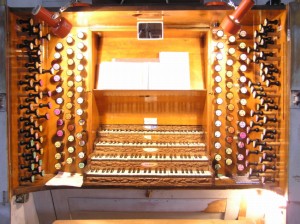
pipesThe City of Liepāja, Latvia, commissioned a new work from me for the organist Lotars Džeriņš to premiere on the 4-manual, 7000-pipe organ of St. Trinity Church during the VI International Organ Music Festival in Liepāja, Latvia on Saturday, September 8, 2007 at 8PM.

Scored for organ, timpani and SATB Choir, Die Freudenkrone: Ehrerbietung zu J.S. Bach (The Crowning Joy: Homage to J.S. Bach), the premiere will feature Lotars Džeriņš (organ), Normunds Everts (timpani), Intis (a local chamber choir, directed by Ilze Valce), and special lighting by Mārtiņa Feldmaņa. The title is taken from part of the text from the chorale movement (verse six) of Bach’s Cantata BMV 103. For this piece, I used that chorale melody (with my own harmonization), along with fragments taken from Bach’s toccata and fugue in D dorian (BMV 538).

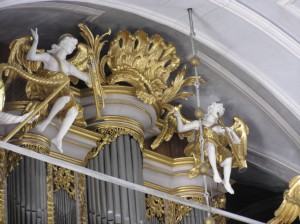
Built by Heinrich Andreas Contius (J. S. Bach’s favorite organ builder) the organ of Holy Trinity Lutheran Church was the biggest organ in the World until 1912. It remains the biggest in Latvia and still one of the most impressive in Europe, filled with rococo ornament and detial. It is the the only organ in the world still extant which was voiced by H.A. Contius.

Here’s a detail above the pipes:
pipesdetail

Here’s the four manuals:
manuals

I was interviewed for two Latvian newspapers: Kultūras Forums and Kurzemes Vārds. If you can read Latvian and want to read one of the interviews, you can read it here.

Chorale text:

Ich habe dich einen Augenblick,
O liebes Kind, verlassen;
Sieh’ aber, sieh’, mit großem Glück
Und Trost ohn’ alle Maßen
Will ich dir schon die Freudenkrone
Aufsetzen und verehren;
Dein kurzes Leid soll sich in Freude
Und ewig Wohl verkehren.
I have for a moment,
my dear child, left you;
but see, see, with great good fortune
and comfort beyond all measure
I shall on you the crown of joy
place and honour;
Your brief suffering will into joy
and everlasting good be changed.

–English Translation by Francis Browne (February 2002), taken from bach-cantatas.com

Die Freudenkrone at VI International Organ Music Festival, September 8, 2007 Read More »

Ivory Duo at Regent Hall in London, August 24

Ivory DuoThe London-based Ivory Duo will perform two movements from my From the Faraway Nearby, a suite of six pieces inspired by paintings by the American painter Georgia O’Keeffe, on Friday, August 24, at Regent Hall in London. This lunchtime concert is sponsored by Trinity College of Music. The concert begins at 1 and admission is free.

A performance of the entire suite is planned for the future.

Ivory Duo at Regent Hall in London, August 24 Read More »

Set fire on Bowed Radio


My string quartet, Set fire to have light, will be one of four pieces featured on this week’s podcast episode of Bowed Radio, a great weekly program put together by Mark Allender. Devoted to music for stringed instruments, every episode spans several genres, from bluegrass to metal to contemporary classical, with brief introductions by Mark between each. You can subscribe via iTunes at the Bowed Radio website. It’s one of the programs I listen to regularly from Latvia.

Set fire on Bowed Radio Read More »

Die Freudenkrone: Ehrerbietung zu J.S. Bach (Organ, Timpani, SATB Choir)

Organ, Timpani and SATB Choir (2007) ca. 11’

Commissioned by the City of Liepāja for organist Lotars Džeriņš to premiere at the VI International Organ Music Festival in Liepāja, Latvia.
Premiered September 8, 2007. With Normunds Everts, Timpani and the Chamber Choir Intis, directed by Ilze Valce

Purchase a PDF of the score and parts via PayPal for $50 and make all the necessary copies for your group. You can also email me for sample pages beforehand.:


Program note:

The title of this work translates to The Crown of Joy: Homage to J.S. Bach, and is part of the text from the chorale movement (verse six) of Bach’s Cantata BMV 103. For this piece, I used that chorale melody (with my own harmonization), along with fragments taken from his toccata and fugue in D dorian (BMV 538).

Ich habe dich einen Augenblick,
O liebes Kind, verlassen;
Sieh’ aber, sieh’, mit großem Glück
Und Trost ohn’ alle Maßen
Will ich dir schon die Freudenkrone
Aufsetzen und verehren;
Dein kurzes Leid soll sich in Freude
Und ewig Wohl verkehren.

I have for a moment,
my dear child, left you;
but see, see, with great good fortune
and comfort beyond all measure
I shall on you the crown of joy
place and honour;
Your brief suffering will into joy
and everlasting good be changed.

English Translation by Francis Browne (February 2002), taken from bach-cantatas.com

Die Freudenkrone: Ehrerbietung zu J.S. Bach (Organ, Timpani, SATB Choir) Read More »

Quattro Differente to perform Panta Rei in three Latvian Cities


The Rīga-based clarinet quartet Quattro Differente (Guntars Gedroics, Kristaps Kitners, Marina Vidmonte & Ceslavs Grods) will include my (recently revised version of) Panta Rei on their concerts in Liepāja, Madona, and Valmiera in Latvia in July and August. Panta Rei, originally an 8-minute work for saxophone quartet, was premiered by the Amherst Saxophone Quartet in Buffalo, New York. Quattro Differente premiered an earlier version of the piece in Ogre, Latvia, last year.

Also on these programs will be works by Nick Gotham (Up From Under/Uzniršana), Jēkabs Nīmanis (Episodes), Santa Ratniece (Septiņi Pakāpieni), Jānis Dūda (Intermezzo), Edgars Raginskis (Asteriona nams), Austra Savicka (About Time), and Imants Mežaraups (Sfinksa).

The performances will take place:
July 1, 4PM
The Gallery Theater of the Latvian Society House
Liepāja

August 2, Evening concert
Latvian Music Festival
Madona

August 9, 7PM
Vidzeme Summer Music Festival
Sēļu Manor House
Valmiera

Quattro Differente to perform Panta Rei in three Latvian Cities Read More »

Sapphire Ensemble @ The Knitting Factory, June 28 @ 7PM


Sapphire Ensemble @
The Knitting Factory – Tap Room
74 Leonard Street – New York

7PM door, 7:30 PM show
Thursday, June 28
Adv. $8/DOS $10

Sapphire Ensemble (Elaine Kwon – piano; Demetrius Spaneas – winds; and other guest performers) is a NYC-based music group with flexible instrumentation that specializes in crossing genres by presenting new classical chamber music influenced by jazz, rock, film, theater, world music, and other forms of improvisation.

This concert will present new works by Nickos Harizanos, Elaine Kwon, Demetrius Spaneas, William Susman, and others, along with my Jazz Suite for Clarinet and Piano.

Actually, my piece may be the oldest in the batch. I wrote it for two of my best friends while I was still a student at Queens College. It’s one of the few pieces from that time (circa 1991?) that was spared from the trash-bin. It’s been performed with some regularity ever since I wrote it. It’s been performed in several U.S. venues, but also in Canada, Mexico, Italy, and most recently here in Latvia. Please check it out.

I met Demetrius virtually at first, via Classical Lounge, but I happened to be in New York at the time, and so we met in person then and again during another visit. He’s a great guy and a great performer. And! He will soon be coming to my part of the world. He’s moving to Russia this coming Autumn, making this a temporary (?) farewell concert to the big apple. Go to the concert and give him a great send-off if you can.

Directions to the Knitting Factory:
You can take the 1 or 9 train to Franklin Street, walk one block south to Leonard, turn left and walk a block & a half to the club.

You can take the A, C or E train to Canal Street, walk 4 blocks south and turn left on Leonard. You could also take the N or R train to Canal Street, walk down Broadway 4 blocks to Leonard, turn right, and see the club at the far end of the block.

Sapphire Ensemble @ The Knitting Factory, June 28 @ 7PM Read More »

Manhattan Choral Ensemble at Columbia University, June 8 at 8PM

Here’s the Manhattan Choral Ensemble’s press release. I wish I could be there in person, but I can’t…we’re performing two more concerts (in Liepāja and Rīga) on the 17th and 18th respectively. If anyone out there can go, I’d be be happy to hear your reactions. There were a few things I tried in this piece that I haven’t tried before, so I would love to know if you think it hangs together or not. They will be premiering my setting for soprano and tenor solo, off-stage solo quartet and choir of the Carl Sandburg anti-war poem Jaws, as part of their New Music for New York commissioning project.

Manhattan Choral Ensemble, Tom Cunningham, Director.

New Music and Old Favorites

Friday, June 8th, 2007 at 8:00pm

Earl Hall, Columbia University
117th and Broadway, New York City

Admission: $15, $12 (students and seniors)

Please join us for our third annual installment of our New Music for New York commissioning project, featuring four newly commissioned works by New York-area composers, including a new work for choir and cello by Patrick Castillo, composer of A Piece of Coffee as premiered by the Manhattan Choral Ensemble in June 2006. Other composers featured include Charles Griffin, Karen Siegel, and Davide Zannoni.

The performance will end with madrigals of Monteverdi and familiar settings of favorite folksongs.

Please join us for a wine and cheese reception after the concert. We hope to see you there!

Directions: The Earl Hall Center is located on the Columbia University Morningside campus. The campus covers a six-block area between Broadway and Amsterdam Avenue from 114th Street to 120th Street. The main entrances of the campus are located at 116th and Broadway and 116th and Amsterdam. These entrances are open 24 hours a day. The Earl Hall entrance is located at 117th and Amsterdam and is only open during normal business hours.

By subway, take the #1 IRT Broadway Local to 116th Street. The Earl Hall Center is located at 117th and Broadway.

Manhattan Choral Ensemble at Columbia University, June 8 at 8PM Read More »

Ana Cervantes plays Murmuring in Comala in Veracruz, MX, June 7

Rumor de ParamoPianist Ana Cervantes commissioned 18 composers to write short piano pieces to commemorate the 50th anniversary of the publication of Pedro Paramo, an important proto-magical-realist novel by Mexican author Juan Rulfo. My Murmuring in Comalawas written for this project. 12 of the pieces, including mine, were recorded on compact disc and presented at the 34th Festival Internacional Cervantino in Guanajuato, Mexico on October 17, 2006. I wrote about the Cervantino Festival some months ago in my memorial entry for the Mexican composer Ramón Montes de Oca Téllez (1953-2006), who died shortly after this last festival.

After the premiere in Guanajuato, Ana has given subsequent performances throughout Mexico: at Irapuato, San Miguel Allende, Abasolo, and San Francisco Del Rincón. She will perform it again tonight at 7:30 PM in the auditorium of the Centro Veracruzano de las Artes (CEVART), Independencia 929, esq Emparan, Centro Histórico in Veracruz, Mexico. Commissioned works by other composers on this concert, from the U.S., U.K., Spain, and Mexico, include Jack Fortner, Anne LeBaron, Tomás Marco, Arturo Marquez, Stephen McNeff, Hilda Paredes and Eugenio Toussaint.

My program note for the piece:
Rulfo’s striking sonic palette (groaning wheels, rattling windows, falling rain and murmuring ghosts), echoes the complex narrative unfolding, where we rarely know whose voice we are hearing initially. Just as sounds imply someone making them, we recognize the voices peripherally, like registering a ghost image. We discover whose voice it was rather than whose voice it is. We must resist the temptation to steamroll through these difficult passages because these veiled voices are so crucial to our understanding. Equally striking is the novel’s non-linear conception of time. It flowers slowly in multiple directions. This is a lovely analog to music, which is surprisingly multidirectional: we listen ahead and backward simultaneously, constantly reinterpreting each new musical gesture by placing it in its previous context and anticipating its direction.

Ana Cervantes plays Murmuring in Comala in Veracruz, MX, June 7 Read More »

Griffin Ensemble in Durbe, Liepāja and Cēsis, Part III

After the concert in Liepāja, we were all fired up to perform in Cēsis. Latvijas Koncerti arranged for a small bus to chauffeur us there, and the trip took a bit over five and a half hours, Cēsis being over an hour on the other side of Rīga. I’m becoming accustomed to these Baltic summers, where the sun just hangs there, beating down for hours and hours. But it accumulates on bus rides, like we’re bugs under a magnifying glass, and it seems to be a distinctly un-Latvian thing to roll the windows all the way down and let the wind whip on through. So, the trip felt long.

Now, there had been some weirdness about the scheduling of this concert. Our contact in Cēsis insisted on changing the date from the originally scheduled one, claiming she thought she couldn’t get an audience for reasons that weren’t entirely clear, but seemed to have something to do with people having too much to do on the weekends now that summer was coming. We agreed to move the date to this one, which coincided with the city’s anniversary, and indeed there were easily over a thousand people milling around, browsing the offering of local vendors, watching some formal dancers, listening to drummers, a flamenco(ish) guitarist (amplified) and a performance that may or may not have been sanctioned but looked like a cross between some circusy acrobatics and a bunch of hippies playing hackey-sack.

The Gallery space where we were to perform was just next to all this. The space was lovely, actually. Here’s a photo of the piano trio warming up before the performance.

But, as you can imagine, the noise coming from outside was constant and distracting. And there was a video in the room on a constant loop, that we didn’t think to ask to have turned off, of a man’s face emerging from a tub of milk or something that included him smiling creepily then gasping a little bit once every five minutes or so. But that part wasn’t the bad part. The bad part was that, as far as we could tell, the only promotion for the concert, in the end, was a single poster placed outside the building. (We later learned, for example, that the nearby music school never learned of the performance.) And this meant that the audience was very small, and very quiet.

Generally speaking, Latvians have described themselves to me as shy and reserved (I remember many years ago seeing a segment on 60 Minutes or CBS Sunday Morning (Man! I miss CBS Sunday Morning!) about how painfully shy Finnish people are, and how many of them remain single because they’re too afraid of the rejection, for example. Anyway, the lack of energy in the room was truly disconcerting.


There was a growing sort of inside joke in the ensemble. A few posts ago, I talked about trying to lighten the mood of the ensemble, ease the nervous tension, be a cheerleader. One of the things that spontaneously happened during the final rehearsal before the performance in Durbe, was that during the final piece where we all play together, this sort of fiddle-tune Irish folk medley where I play the bodhrán, in order to get them energized, I cried out a couple of loud, wild hillbilly hoots. Now, they only smiled in reaction, but secretly, they loved it. When we performed in Liepāja, a couple of them gave me the big eye, waiting for me to give a big shout during the finale. Now it was time for me to be shy, and I whimped out, and they gave me hell for it. So here we were in Cēsis, and I gave a big howl, stomped my feet a couple of times, and I saw one person in the audience give a big smile. That was the only noticeable change in the room. That was a hard concert.

At the same time, there was a silver lining after all. We were invited to give the concert in Rīga, on June 18th, at the Jaunais Rīgas Teātris. Cēsis, by the way, is the home of one of the national beers, and it’s not a bad beer. Before getting back on the bus, we loaded up on pizza (not as good as the beer, and I miss NY pizza even more than I miss CBS Sunday Morning) and good, cold, dark beer, which is no small consolation either.

Next up is a second, slightly truncated version of the concert back here in Liepāja that we will give on June 17th. Here’s what one of the flyers looks like.

Griffin Ensemble in Durbe, Liepāja and Cēsis, Part III Read More »

Set fire to have light – The Griffin Ensemble in Durbe, Liepāja and Cēsis, Part II


I just uploaded to YouTube a second video from the Liepāja concert, this time of the string quartet playing Set fire to have light. Click on the link for a PDF of the score if you’d like to follow along. The title is taken from a poem by Rumi, and the piece employs Arabic rhythmic (iqa’at) and scalar (maqamat) modes. I wasn’t trying to write an overtly Arabic piece, but rather to see what I could derive from an exploration of these specific materials. The quartet members are: Baiba Lasmane, Ginta Alžāne, Tatjana Borovika and Dina Puķite.

Set fire to have light – The Griffin Ensemble in Durbe, Liepāja and Cēsis, Part II Read More »

The Griffin Ensemble in Durbe, Liepāja and Cēsis, Part I

Here is the poster that was displayed in Liepāja and Cēsis advertising our concerts.

This past week, between Sunday and Saturday, we gave three performances, one each in Durbe, Liepāja and Cēsis. As one might expect, the week brought both problems and successes.

The performance in Durbe was sort of a trial run, a very necessary one, as it shone a spotlight on things I hadn’t thought enough about. It wasn’t a bad concert, but it was nervous, rushed, and bumpy in many senses. I had to emcee, stage-manage, turn pages for one piece and perform too. Speaking in Latvian is not my strong suit, and I wrongly figured I would stage-manage and introduce each piece simultaneously. This meant once or twice giving my back to the audience as I spoke and moved chairs and music stands at the same time. Nothing that seemed deliberately rude, but just trying to hurry, hurry, hurry, as if apologizing for taking people’s time, something that I afterwards remedied.

In fact, the whole week was illuminating on several fronts: about my own writing, the musicians’ experience of my music and their own attitudes about performing (with sub-differences related to gender and/or culture), the details of which I may go into at a later time.

But suffice it to say that over-preparation, under-preparation, nervous energy or self-esteem issues almost invariably led to faster tempos taken in the first concert. (And the concomitant problems of faster tempi, namely that the musical ideas don’t really get a chance to breathe or be properly heard).

So, I wasn’t the only one trying to hurry, hurry, hurry, as if apologizing for taking people’s time. In fact it was only the clarinetist, Uldis, who seemed completely immune to any problem. In between the first and second concert, I wound up talking to the string quartet musicians about body language and tempo and expressivity and such, and generally playing the good cop, as their problem was that they were essentially over-prepared (and also, I think, a little intimidated by Uldis’ confidence and reputation when they played the quintet with him). Alternately, with the pianists, I wound up sort of playing the bad cop, as one of them was less prepared and they so rarely agreed with each other about interpretation and tone.

The concert in Liepāja was GREAT. I was calm, and so were the musicians. The hall was nearly full, we all played well, and the audience was enthusiastic enough to demand an encore. There was good energy all around. As a bonus, one representative from each of the two funding bodies that supported these concerts attended, and both were happy. One of the winners at that performance was Dina Puķite, the cellist. She is a lovely, mild-mannered woman. And my duet for cello and clarinet requires a certain rock-inflected attitude, which I had to several times coax from her though it was clearly there. Many of her colleagues in the Liepāja Symphony were in the audience, and went nuts for her performance. You can see it here:
To be continued…

The Griffin Ensemble in Durbe, Liepāja and Cēsis, Part I Read More »

Paris, 2 choral commissions, and the Griffin Ensemble soon to debut

A few things to report as I surface to breathe. First, as an update to my entry of a few months back, I was accepted into the European American Musical Alliance summer program in Paris. I will go there for the month of July to study conducting with Mark Shapiro (from Mannes in New York). Should be great fun, and from what I understand, a fairly intensive experience. And an expensive one too, as I discovered after sifting through the available apartments for the month of July via craigslist.

Second, on a whim, I threw my hat in the ring to be considered for a commission from the Manhattan Choral Ensemble, directed by Tom Cunningham. They run a small commissioning program that echoes the Dale Warland Singers’ model. They commission three or four composers to write short works, give them a performance, and then select one of those composers to receive a larger commission for the next season. To my happy surprise, I was chosen, along with composers Patrick Castillo, Karen Siegel, and Davide Zannoni. Six degrees of separation / Small world spoiler alert: I’ve known Davide for years. The only hitch was I had less than a month to write the thing.

No matter. I had it in the back of my mind to set some of Carl Sandburg’s poetry. A former composition student back in New York kept bringing in these amazing Sandburg poems, and I resolved to get around to setting Sandburg at some point, and this seemed a good a time as any. I dug through a batch, and settled on the anti-war poem Jaws:

SEVEN nations stood with their hands on the jaws of death.
It was the first week in August, Nineteen Hundred Fourteen.
I was listening, you were listening, the whole world was listening,
And all of us heard a Voice murmuring:
“I am the way and the light,
He that believeth in me
Shall not perish
But shall have everlasting life.”
Seven nations listening heard the Voice and answered:
“O Hell!”
The jaws of death began clicking and they go on clicking.
“O Hell!”

For obvious reasons, one usually just uses the title of the poem as the title of the piece, but in this case, for equally obvious reasons, I’m not calling it Jaws, but rather The Whole World was Listening. I set it for soprano solo, tenor solo, off-stage quartet and divisi choir, and for the first time, included some aleatoric elements as well as specific movements the choir must make. They will perform it on June 8 in New York. The concert is not announced on their web site yet, but I trust it will be soon enough.

In the meantime, I interrupted a piece I was working on for Putni, a setting of a Federico Garcia Lorca poem, called El Paso de la Seguiriya:

Entre mariposas negras,

va una muchacha morena 
junto
a una blanca serpiente
 de niebla.

Tierra de luz,

cielo de tierra
.

Va encadenada al temblor

de un ritmo que nunca llega;

tiene el corazón de plata

y un puñal en la diestra.

¿A dónde vas, siguiriya

con un ritmo sin cabeza?

¿Qué luna recogerá

tu dolor de cal y adelfa?

Tierra de luz,

cielo de tierra.

I was attracted to the possibilities inherent in the lines, Tierra de luz, cielo de tierra (Earth of light, Sky of Earth). Spring-boarding off the Flamenco workshop I gave them in February, I’m trying to engage with (yet not limit myself to) Flamenco rhythms and harmonies, and this piece also includes palmas and contrapalmas parts for the singers to clap. I hope to finish it soon.

Also in the meantime, preparations for my All Griffin concert are proceeding as we make our mad dash for the finish line. We’ve got about 75 minutes of my music in rehearsals, which have been going essentially smoothly. I gave an interview for the city’s main daily, Kurzemes Vards, yesterday, and the posters are coming tomorrow. We will give four or five performances over the next six weeks in Liepāja (2), Durbe, Cesis, and possibly Rīga. I did arrange for a recording engineer, and will enlist the daughter of one of the pianists to video record it. So, I’ll post some stuff on YouTube and/or make a podcast of it for anyone who wants to hear it.

Paris, 2 choral commissions, and the Griffin Ensemble soon to debut Read More »

The Whole World Was Listening (SATB a cappella, with Soprano and Tenor soloists, off-stage quartet, more)

Soprano and Tenor soloists, off-stage SATB quartet, SATB choir divisi, a cappella, with or without bass drum and including aleatoric elements (2007) ca. 7’
Carl Sandburg, Text.

Premiered and commissioned by the Manhattan Choral Ensemble, Tom Cunningham, director, as part of their New Music for New York commissioning project.

Purchase a PDF of the score for $1 per copy via PayPal:


Click here to open a PDF sample of the first 10 pages in a new window.

Program notes:

Detecting in the poem three kinds of narratives/emotional/functional states, loosely paralleling a Freudian division, I carved up the musical forces so that

1. the soprano solo (and by extension the solo quartet) is the voice of religion/reason/conscience (super-ego)
2. the tenor solo is the narrator/objective observer (ego)
3. the choir proper represents the impulse toward violence (hence their essential wordlessness and martial stomping) that we somehow never seem to collectively keep in check (id)

Jaws – Carl Sandburg

SEVEN nations stood with their hands on the jaws of death.
It was the first week in August, Nineteen Hundred Fourteen.
I was listening, you were listening, the whole world was listening,
And all of us heard a Voice murmuring:
“I am the way and the light,
He that believeth in me
Shall not perish
But shall have everlasting life.”
Seven nations listening heard the Voice and answered:
“O Hell!”
The jaws of death began clicking and they go on clicking.
“O Hell!”

The Whole World Was Listening (SATB a cappella, with Soprano and Tenor soloists, off-stage quartet, more) Read More »

What’s at the bottom of the barrel? Music.

The website HigherEdJobs.com recently posted the results of a survey of faculty (and administrator) salaries, organized by discipline and rank. The survey was administered by the College and University Professional Association for Human Resources. 38 academic disciplines are represented, and the results are based on responses from 824 institutions. The lowest paid discipline was music (actually it was sort of tied for last place with Theology, go figure). Read it and weep here.

What’s at the bottom of the barrel? Music. Read More »

World Music and Musicianship.

I spent much of February preparing and giving 4 workshops in Rīga on rhythmic organization in music outside the European tradition. Antra Dreģe, the director of the women’s vocal ensemble Putni (whom I wrote about in this blog previously), applied for a grant to bring me to Rīga, ostensibly to help the ensemble cohere better when tackling complex rhythmic passages by introducing them to approaches to rhythm from other parts of the world.

I’ve thought about this a lot, actually, the way that musicianship is taught. And the way that World Music is taught, too.

Back in grad school, I took a grad-level Introduction to World Music course. I think it was pretty typical of such courses. The textbook material spanned the continents, focusing on the music of Africa, India, Asia, Native America and South America. There were a couple of cassettes that came with it. Each music was handled with two ranges of vision, namely a broad description of the music culture and then a focus on some individuals’ stories within the culture. It was ultimately all very biographic-socio-anthropological. And while my appreciation for that music was genuine, it also seemed somehow insubstantial. Okay, it was an introduction. But what I mean is that there was nothing hands on about it, nothing the equivalent of a laboratory experiment to get that music somehow in my nervous system. I guess my point is that the experience was very passive.

I taught Sightsinging and Ear-Training at Hofstra University in New York for 6 years as an adjunct. Frankly, I think the title of such a course is a misnomer. It should be called Musicianship for Musicians, or something like that. It combines singing individually and in parts, clapping, keyboard skills, dictation and analysis.

At some point in the middle of my ‘tenure’ (ha!) there, I had something of a revelation regarding my class that led me to try some experiments with my classes. It requires that I tie together a few divergent strands, so bear with me, please.

Rhythm
My first serious musical experiences were as a drummer, though I put it aside for voice and composition by the time I got to college. Nevertheless, it’s always been a critical part of my musical and compositional thinking, and I’ve never abandoned it completely. Apropos of my comments above, over the years I’ve dabbled with West African drumming, Japanese Taiko, and the Irish Bodhran. Even here in Liepāja I’ve played drumset at a local pub with some local musicians on a few ocassions. Anyway, I never neglected rhythm in my classes.

Vernacular Music
I am one of the now quite numerous and therefore no longer quite so unclean great unwashed. Most of the guys I went to school with would not shudder with disbelief at say, a serious examination as opera of Pink Floyd’s The Wall, or fail to appreciate just how cool it is that The Police’s quirky and twisted Mother from Synchronicity is a 7/8 12-bar blues, for example. Many of us played in bands, and most of us take this music seriously. While I’m talking about Sting – he is an excellent musician. Just think about the complexity of singing Spirits in the Material World while playing that funky bass line. I know for damned sure that most of my students at Hofstra would have broken down and cried if I’d given them an assignment that complex.

World Music (and Folk Music too) – A rose by any other name.
I hereby join the chorus of those who bemoan the term World Music to describe anything that is basically outside the mainstream of the European concert music heritage, Jazz, or one of the many bastard stepchildren of American rock music. Be that as it may, the term isn’t going anywhere anytime soon. And if we can live with the duality of the term Classical Music both as a style and an era, we can live with this one too.

I’ve noticed something about some of the musicians in this category. I saw the great salsa drummer Bobby Sanabria at a percussion conference, and he played the cinquillo (the 5-note clave pattern) with his right foot (with a bass drum pedal against a mounted cowbell), while playing congas with his hands, all the while telling a story in a completely natural fashion. I saw a salsa band at the South Street Seaport one Cinco de Mayo, and the lead singer was also the conga player. The polyrhythmic complexities he performed between the vocal and rhythmic lines were staggeringly sophisticated, yet he made them seem effortless. At another percussion conference, I saw an Arabic doumbek player accomplish much the same thing. Actually, at the same conference, I also saw Vinx, a djembe-playing pop singer who’d opened for Sting in the 90’s. (How’s that for tying things together? Maybe I’m the new Kevin Bacon. Or Sting is.)

The music field as a whole recognizes the sophistication of Indian classical music or West African drumming (we do, don’t we?), but nobody has yet surveyed that literature in a systematic way with an eye toward making it at experientially available to all music majors. There are several gamelan ensembles throughout the country, many African (and some Latin) drumming ensembles, and a handful of programs that offer Arabic or Indian music ensembles. Several universities have umbrella World Music Ensembles, and most have Introduction to World Music classes. I began thinking about the pedagogical value of this music, though, and to wonder why, despite all I mentioned above, it is only available on the margins and not integrated into the curriculum in a meaningful way.

Here’s a very broad statement about the development of music (from a composer’s point of view): it is a constantly evolving conception of how to carve up musical pitch space and musical time. The 20th century saw a grand speciation, continuing the evolution metaphor, yet even in the 21st century our universities barely engage students with this music. Add to this mixture the myriad ways that musical space and time are treated outside the concert music tradition, and maybe we start to see an error in our calculus. Maybe the effort spent creating young Schenkerian listeners is the equivalent of clothing them in an aural straightjacket. (Schenkerian analysis is extraordinarily effective, but only for a narrow slice of the repertoire.)

Our discipline has become so fractured by specialization, not to mention frustratingly turf-protective, that this idea is actually more radical than it should be. Hell, when I suggested we offer an Introduction to World Music course at Hofstra, one of the tenured professors suggested it better belonged in the Anthropology Department, which struck me as elitist at best, or racist at worst. I had a job interview last year at a sizable Midwestern university (I didn’t get the job), but one of the questions I was asked during the interview process was: why do we do melodic dictation? I answered that melodic dictation was part of a gradual process of moving from the relatively simple to the complex by isolating a single element. But he said, no, why do we do melodic dictation at all? He then elaborated, saying that it was pointless to separate melodies from their harmonic framework, and what should really be instituted was a gradual process from melodies together with simple harmonies to more complex melodic and harmonic structures. An interesting point, actually. But one that also highlights the scope of his musical concerns (approximately 300 years of the Western European common practice period) while failing to recognize the existence of so much music that is primarily melodic in nature or devoid of functional harmony. I really, really love Bach. But there is so much more music to love.

I think this situation can be summed up by a scene in the Simpsons, from an episode called “Homer the Heretic:”

Ned: Homer, God didn’t set your house on fire.
Rev. Lovejoy: No, but He was working in the hearts of your friends and neighbors when they came to your aid, be they [points to Ned] Christian, [Krusty] Jew, or [Apu] … other.
Apu: Hindu! There are 700 million of us.
Rev. Lovejoy: Aw, that’s super.

There’s nothing new under the sun. It’s called Eurhythmics.
Clapping, stepping, playing or conducting while singing or vocalizing simultaneously is what is broadly known as eurhythmics. The Swiss composer Emile Jaques-Dalcroze developed a eurhythmic, or whole-body approach to teaching musicianship nearly a century ago. A sizable sub-culture has arisen in music education circles devoted to this approach. The Dalcroze method currently places a heavy emphasis on teaching children and is thus invaluable to music education majors, but it has yet to be integrated into a broader music curriculum geared toward non-children.

Wouldn’t some of this World Music stuff qualify as eurhythmic? Absolutely. For example, I have my students clap a clavé and sing a salsa melody. Or they sing an Arab melody while clapping an Iqat (a rhythmic mode that accompanies it). I also use Glen Velez’s Handance Method, where we play frame drums, step in a pattern and vocalize rhythms in patterns, all while cueing off each other (which by the way, is also a great framework in which to introduce some simple improvisation).

By way of analogy, consider the possibilities in a weight room. You can use the nautilus machines or you can use free weights. Which is better? The free weights, of course, because you have to stabilize the weight yourself through the entire range of motion, thus using more muscles at once. What’s even better than free weights? Free weights on a physio-ball, because you have to stabilize the weights through the whole range of motion while using other muscles to counterbalance that motion (you are after all, on a ball). Any trainer knows that you get more from exercise if you concentrate on what you’re doing. Your whole nervous system is involved in that activity. Now that’s focus.

It’s the same with eurhythmics. If you are stepping, clapping and singing at the same time, your whole body is awake to the activity. I’m sure that those of us who are educators have had the experience of watching students make mistakes and (outwardly, at least) not even notice that they’d made a mistake. Once I started incorporating this way of thinking into my classroom, when students made rhythmic mistakes, they knew it, and it helped them with pitch too, mostly because they could not possibly sleepwalk through any activity.

It’s a classroom, stupid.
One of the things I found frustrating about teaching Musicianship is the need to individualize the experience while at the same time having the reality of 15 students in the room and 50 minutes to work with. An attractive element of some World and Folk Music is the communal aspect of their music making, and in effect, by including things like sung drones or call and response, I can create a small musical community of the classroom. An added benefit of this is that I can assess an individual student’s performance of a homework assignment, not with 14 other kids sitting silently, but with them involved too. It makes it more interesting for them and creates a supportive environment.

The workshops.
So, back to Rīga. Over the course of a week, I gave four workshops. I devised performance exercises, created broad summaries, found good illustrative listening examples. Here’s what the schedule looked like:
February 20th – Flamenco. Clapping technique, palmas and contrapalmas. Melodic/harmonic organization in Flamenco.
February 22nd – African rhythm and song. Introduction to rhythmic organization in West African music. Some simple folk songs that include singing, clapping and stepping all together.
February 23rd – Gamelan and Ketjak from Bali and Indonesia. Emphasis is placed on interlocking rhythms within larger rhythmic cycles. We will sing some Gamelan-like examples and chant Ketjak.
February 27th – Indian music. Solkattu, bols and tala. Introduction to solkattu and bols, which are vocal syllables used to reflect the sounds made by playing the tabla and mridangam drums. Tala is the way that time is organized in Indian music. We will try to speak these syllables while ‘keeping tala”.

There were between 10 and 20+ people at each workshop, mostly the singers in Putni, but also some students, pedagogues and amateurs. They all seemed to have fun, and the experience was rewarding for me, too.

Ultimately, I have absolutely no desire to supplant the canon. I love it, too. But it’s not only part of a continuum, it’s part of a world. My revelation at Hofstra was that what I wanted to do most for my students was to equip them to solve whatever kind of musical problems they might encounter, and if possible, to make the encountering and the grappling with problems fun. Many composers speak of having ‘a tool box’, a set of skills that they can bring to bear when dealing with the sometimes puzzle that is composition. The more tools, the better. My goal with these workshops was to try to bring the participants as close as I could to hearing and feeling this music the same way that the musicians who create it hear it and feel it. And maybe walk away with a new tool or two.

World Music and Musicianship. Read More »

Concerto for Chamber Orchestra (2008)

I have written a four-movement Concerto for Chamber Orchestra (Weaving Olden Dances), a consortium commission comprised of:

Westchester Chamber Orchestra (NY), Barry Charles Hoffman, Director
Western Piedmont Symphony (NC), John Gordon Ross, Director
San José Chamber Orchestra (CA), Barbara Day Turner, Director
Appalachian State University (NC), James Allen Anderson, Director

It was premiered May 3, 2008 by Barry Hoffman and the Westchester Chamber Orchestra at Iona College in New Rochelle, NY. Here are five excerpts from the four movements taken from a live recording of the premiere: concertoexcerptscg.mp3

To view/download a PDF of the score that matches the recorded excerpt, click here.

Instrumentation:
2 Flutes
2 Oboes / 2nd dbls EH
2 Clarinets
2 Bassoons
2 Horns in F
2 Trumpets in Bb
1 Percussionist:
Timpani (5); Tambourine; Cajón (or shakers, if unavailable); Susp Cymbal; Bodhrán (or 3 large, closely tuned toms)
Strings

Total duration: ca. 24′
(Mvt. 1: ca. 4’30”; Mvt. 2: ca. 6’30”; Mvt. 3: ca. 7’30”; Mvt. 4: ca. 5’30”)

Program Notes:
Given that composers have defined the term “Concerto” rather fluidly historically, when Barry Hoffman approached me about composing a new Concerto for Chamber Orchestra, I had to decide what it would mean for me. In the end, I decided on a blend of Baroque and 20th/21st Century conceptions. I have long admired that the Baroque Dance Suite represented an internationalist ideal of artistic and intellectual commerce flowing throughout Europe at that time, whose non-variable core included the Allemand (German), the Courante (French or Italian), the Sarabande (Spanish), and the Gigue (English or Irish). Since one of my major musical preoccupations is with non-Western and folk musics, it struck me that the international nature of the Baroque Suite might make an interesting vehicle for the creation of a suite of pieces that explore elements of world and folk musics.

To that end, the first movement, after a muscular opening featuring a big role for the timpani and aggressive writing for the brass and strings, quickly moves to a hypnotic expansion of the opening ideas that employs (in the winds and strings) some of the rhythmic interlocking characteristic of Indonesian and Balinese music for Gamelan. The second movement is a Pavane, which is a French relative of the Allemande. Traditionally this movement is unsyncopated, and builds from smaller fragments into a larger work. Here, I took a 13th Century anonymous Hymn tune called Novus Miles Sequitur, and similarly build the piece from smaller fragments or phrases. In place of the Sarabande, I based the next movement on the Siguiriya, one of the Flamenco dance forms. A ritornello based on flamenco guitar styles occurs three times in the movement, contrasted by solo sections and flights toward non-flamenco tonalities, though the Andalusian scale dominates the piece at various transpositions. The final movement is where the Gigue would occur in the Suite. This movement is a blend of Irish Sean Nos and traditional Irish and Appalachian fiddle styles.

There are passages that are virtuosic for the orchestra as an instrument a la Bartok, but I also tried to treat orchestral color as a component of this, striving to create a wide variety of colors over the course of the piece. Every individual wind and brass player, and also the timpanist each gets at least one solo at some point. Individual string players are also given solos, and the various sections of strings have prominent solos or duos. One more note on the solos and the question of virtuosity: I think it’s important to point out that musical virtuosity is expressed by performers not exclusively by the ability to master extraordinarily difficult passages, but rather to bring their full musicality to bear on any passage, whether it’s simple or not.

Composer Charles Griffin and Conductor Barry Hoffman Discuss the New Concerto for Chamber Orchestra:

Barry Hoffman – What makes this a Concerto for Orchestra?

Charles Griffin – When you first approached me about the piece, it was your suggestion that I write a Concerto for Chamber Orchestra. Because the request was not for a solo concerto (traditional association with the term “Concerto” is a Romantic one, evoking soloistic virtuosity and the kind of potential for drama that arises from pitting the soloist against the full orchestra), I was forced to consider other, arguably atypical models. I say arguably, because composers’ conception of the Concerto as a form has in fact gradually evolved over the centuries to allow for something much looser in the 21st Century anyway. Bartok’s Concerto for Orchestra of 1943, for example, treats the Orchestra itself as the virtuoso instrument, with each section of instruments featured in a soloistic or virtuosic way. The Concerto as a form originates in the Baroque Era, and at that time, composers more often than not conceived of drama in the Concerto not so much by pitting a soloist against the rest of the orchestra, but rather by contrasting smaller groups of instruments against each other.

In the end, I decided on a blend of Baroque and 20th/21st Century conceptions. There are passages that are virtuosic for the orchestra as an instrument a la Bartok, but I also tried to treat orchestral color as a component of this, striving to create a wide variety of colors over the course of the piece. Every individual wind and brass player, and also the timpanist each gets at least one solo at some point. Individual string players are also given solos, and the various sections of strings have prominent solos or duos. One more note on the solos and the question of virtuosity: I think it’s important to point out that musical virtuosity is expressed by performers not exclusively by the ability to master extraordinarily difficult passages, but rather to bring their full musicality to bear on any passage, whether it’s simple or not.

B.H. – Why did you choose the baroque dance suite form?

C.G. – I was on a Bach kick last year. I was listening, reading about and playing through lots of Bach. For me, as with many composers, Bach is a life-long mentor and sustainer, one of the ones to go back to for subconscious composition lessons from time to time. I started every day for about 6 months by playing through some Chorales. During this period I became interested in Bach’s Suites, and the idea of artistic and intellectual commerce flowing throughout Europe at that time. The Baroque Dance Suite by the time of Bach became a semi-standardized multi-movement work whose non-variable core included the Allemand (a stately German dance in 4/4 time), the Courante (a lively French or Italian dance in 3/4), the Sarabande (a slow Spanish dance in 3/4), and the Gigue (a lively English dance in 6/8). There are many variable additions to the Suite, including Overtures, Minuets, Gavottes, etc. While in the traditional suite, all the pieces are related by key, they are not related thematically.

Since one of my major composerly preoccupations is with non-Western and folk musics, it struck me that the international nature of the Baroque Suite might make an interesting vehicle for the creation of a suite of pieces that explore elements of world and folk musics.

B.H. – In your program notes, you talk about composing the piece, “with a contemporary eye toward the meaning of internationalism today.” Do you feel you accomplished this? If so, how?

C.G. – The original plan was to write a five movement suite, beginning with an Overture. As I was writing, I realized that the piece was getting long. After I’d completed four movements of the planned five, I realized I’d already had approximately 26 minutes of music. You stopped me (for now) from writing a fifth movement, which will eventually be located in the spot between the current 2nd and 3rd movments.

Movement I – Trance Overture. After a muscular opening featuring a big role for the timpani and aggressive writing for the brass and strings, it quickly moves to a hypnotic expansion of the opening ideas that employs (in the winds and strings) some of the rhythmic interlocking characteristic of Indonesian and Balinese music for Gamelan. Download a perusal copy of Movement I here.

Movement II – Pavane. The Pavane, along with the Tombeau, is a French relative of the Allemande, which was typically the first proper movement of the Suite. An Allemande is typically in 2/4 or 4/4, unsyncopated, and builds from smaller fragments into a larger work. Here, I took a 13th Century anonymous Hymn tune called Novus Miles Sequitur, most likely of British origin and similarly build the piece from smaller fragments or phrases. This is the most traditional sounding movement in the piece, with a harmonic and color palate that is a blending of English and French classical styles. Download a perusal copy of Movement II here.

Movement III – Not yet written, but this is where the Courante would occur in the Baroque Dance Suite. I will eventually write something here based on Eastern European traditions.

Movement IV – Tierra de luz, Cielo de Tierra. This is where the Sarabande, a dance of Spanish origin, would occur in the Suite. I based this movement on the Siguiriya, one of the Flamenco dance forms. A ritornello based on flamenco guitar styles occurs three times in the movement, contrasted by solo sections and flights toward non-flamenco tonalities, though the Andalusian scale dominates the piece at various transpositions. Download a perusal copy of Movement IV (identified as Mvt III in the score) here.

Movement V – Weaving Olden Dances. This is where the Gigue would occur in the Suite. This movement is a blend of Irish traditional music and its American stepchild in Appalachia. Download a perusal copy of Movement V (identified as Mvt IV in the score) here.

Do I feel I accomplished this? Well, it’s an experiment. The Overture movement cannot stand on its own, but the others all can, I believe, which was a secondary or possibly tertiary goal for me. I’ll let others judge how they hang together in sequence. That being said, and to be quite honest, the piece won’t be fully complete for me until that remaining movement is written and placed together with the others. I think the missing movement will help to deepen the sense of stylistic contrast that already exists from movement to movement.

The following reviews are of the San José Chamber Orchestra’s performance of my Weaving Olden Dances: Concerto for Chamber Orchestra that took place at Le Petit Trianon Theater (72 N. 5th Street) in downtown San José, California on Saturday August 29, at 8PM and Sunday August 30, at 7PM.

NEW WORK, OLD DANCES, ELVIRA’S CONCERTO
By Paul Hertelendy
artssf.com, the independent observer of San Francisco Bay Area music and dance
Week of Aug. 31-Sept. 7, 2009
Vol. 12, No. 5
Read the full review here.

The clever idea of a commissioning consortium enables several groups around the country (and not just one) to present a new work om concert. The San José Chamber Orchestra opened its season with the West Coast premiere of New Yorker Charles Griffin’s “Weaving Olden Dances,” part of a merry-go-round taking the dances to four different venues spanning both coasts. It’s a big 31-minute, four-movement work of modern sounds laid over traditional forms—a well-made piece avoiding the expected clichés.

Griffin, 41, enters skillfully into disparate realms. An agitated timpani opening suggests an action movie, giving way to a perpetual-motion ostinato that the composers says was inspired by the gamelan. The Pavane section that follows is lovely, escapist romanticism soaring skyward. The third movement is the most overtly dance-like, with the orchestra parroting the broad strums of the flamenco guitar running through modes as well as the beat of the zapateado dance—a latino tap dance without the tap shoes. The finale, after Irish models, is a joyous noise rushing to a climax. The format idea is derived from the dance suites so prevalent 300 years ago.

There were various solos within this concerto for orchestra, none more notable nor more praiseworthy than on viola (Eleanor Angel) and cello (Lucinda Breed Lenicheck).

Altogether, “Weaving Olden Dances” is an effective work with definite audience appeal. And Music Director Barbara Day Turner led it with high energy, nuance and consistency.

A MODEL OF DIVERSITY: SAN JOSÉ CHAMBER ORCHESTRA OPENER
By Gary Lemco
The Classical Music Guide Online
Read the full review here.

The musical surprise came in the form of Griffin’s four-movement Concerto for Chamber Orchestra, which might be a distant cousin of pieces like Cowell’s Persian Set. A sort of Baroque dance-suite, the music opened with a Trance Overture, in the manner of the gamelan orchestra of Bali, percussive, chiming, clangorous, brash, and declamatory. Long pedal points punctuated the interlocking rhythmic impulses. Some might have thought this music composed by Villa-Lobos. The second movement, Pavane, sounded like a medieval “chest” or “consort” of instruments, utilizing a concertante violin to intone a 13th-century cantus firmus called Novus Miles Sequitur. The third movement, Tierra de luz, Cielo de Tierra, enjoyed a concertante cello opening. The music became quite syncopated, often touching upon the world of Ginastera‘s Estancia ballet. At its climax, the music became a fugue in flamenco style. The last movement, Weaving Olden Dances, began with a viola that lisped in Irish accents, inviting us to a fierce gigue or reel that incorporates Sean Nos and Appalachian dance elements, allusions to the music for Braveheart and Aaron Copland. Almost every member of the orchestra had a virtuoso, solo run or riff to offer the color of his contribution. Eclectic it was certainly—so even Bartok may have had a hand in it—ending with something like a sea-shanty in Technicolor. But, that it was a successful vehicle for Turner and her SJCO there could be no doubt.

JON NAKAMATSU AND MOZART’S PIANO CONCERTO NO. 21 — A HEAVENLY PAIRING
By Richard Scheinin
San José Mercury News
Read the full review here.

The bulk of the program’s first half was devoted to a new work by Charles B. Griffin, a native New Yorker who lives in Latvia. A nomadic, international sensibility informs his “Weaving Olden Dances: Concerto for Chamber Orchestra,” which draws inspiration from Indonesian, French, flamenco and Irish/Appalachian dance forms.

Commissioned by a consortium of American orchestras (including the San Jose Chamber Orchestra), the work unfolds in four movements.
The first echoes the jig-sawed structure and rhythms of the Balinese gamelan; its highlight is a sinuous and long-lined solo for violin (Cynthia Baehr, here), composed in the manner of Lou Harrison. The second movement, a Pavane, built from a 13th century hymn, is lushly elegiac. The final movements, respectively, draw on flamenco and Celtic melodies — rhythm-charged, but remarkably generic, as if inspired by World Music 101 classes.
Hats off to Day Turner (who has devoted much of her career to performing music of living composers) and the orchestra’s many soloists (i.e. Bruce Foster, such an expressive clarinetist) for giving this piece a shot.
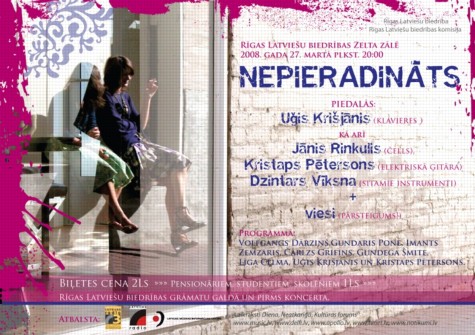
Concerto for Chamber Orchestra (2008) Read More »

The Griffin Ensemble – The Ultimate in DIY?

Ensemble
After I’d been here in Liepāja for about a year, this sort of strange but organic thing happened, that would never have happened (for me anyway) in New York. Quite a few pieces of mine have been performed here since I moved here, many of which I have blogged about:

• the orchestra piece performed by the Liepāja Symphony (now called Pick it up and run with it);
• the piece that Putni took on tour (The Moon of the Floating World);
• a piano duo (Do Not Go Gentle);
• a duet for alto saxophone and viola (for the straight way was lost);
• a clarinet quartet (Panta Rei);
• a choral piece (Aija Žužu).
• a piano trio (three musicians from the LSO (Cambiando Paisajes));
• and the two pieces I wrote for my friend Olexij: the quartet for trumpet, clarinet, saxophone and bassoon, (Not Waving but Drowning) and the piece for the chamber orchestra at the site of the destroyed bridge (Elegy).

On top of those pieces, I’d also given a few scores away over the course of the year. The cool and organic thing that began to happen is that several musicians took it upon themselves to organize small chamber groups to start working on my music. Dina Puķite and Ginta Alzane, the cellist and violinist who’d played my trio, without my even knowing it at first (happy surprise!), roped in two more colleagues from the LSO and began working on a fairly challenging string quartet of mine, one that uses Arabis scalar and rhythmic modes (Set fire to have light). And a local pianist, Ludmila Irina started working on a duet of mine with her clarinetist husband (Jazz Suite).

It suddenly started to seem like enough local musicians were all concurrently working on enough of my music to perhaps justify a concert, and they all were not only ammenable to the idea but excited by the prospect. I was encouraged to begin thinking about a program. And in a relatively short time it came together. Perhaps an odd combination but a relatively portable one, and one for which I already had or could rearrange a few pieces: clarinet, string quartet, piano four hands and percussion.

The Griffin Ensemble was born. And I say that with uncessary but very real sheepishness. Two of the best known composers of our time started their own ensembles when they were beginning. But there’s a part of me that feels immodest in doing so. Whatever. I’ll get over it.

The next step was to figure out how I could get the musicians, though they all across the board offered to play a concert for nothing. In the end we applied for a grant, in a process that resembles nothing exactly that I’ve experienced or heard of in America. But all the same, we got funding for one performance (hooray!) and are awaiting word for another two. The performance(s) will take place here in May.

I haven’t finished getting the music ready yet, and I am going to compose something new as a finale to the concert, something fun for the entire ensemble to play, either an arrangement of some Irish trad music or something original but inspired by it, so I can give my new bodhrán a spin (so to speak) in public.

The Griffin Ensemble – The Ultimate in DIY? Read More »

Back to our regularly scheduled program…

Wow, it’s been a month since my last post. But I’ve got good reasons, being on the road for most of the time since Christmas. I welcomed in the New Year in Switzerland. We were there for an expensive week of bears, fondue, mountains, markets, churches and art. We went to Lucerne, Bern, Interlaken and Zurich. Beautiful country. Efficient rail system. Friendly people. Did I mention expensive? So expensive, getting the check is like a twice-daily ice-water bath. Brr.

After a two day stop in Riga, I headed for New York for two weeks, where I enjoyed a performance of a song cycle of mine for high voice, clarinet and piano called The Far Field, attended the Chamber Music America Conference in Manhattan, went to a good friend’s wedding, and also managed to squeeze in some business and shopping errands between visits to friends and family.

The Far Field performance was special for me, as it’s one of those pieces of mine that I have always felt especially close to, yet it isn’t performed much. Sort of like that awkward kid with a heart of gold that sits off to the left somewhere in third grade and you know can grow up to be somebody if people just give her a chance. It’s a big piece, about 22 minutes long, a setting of a difficult poem by Theodore Roethke that basically looks death in the face and comes to accept it as a beautiful and necessary thing. You can read the poem here. Soprano Melissa Fogarty, did a really great job with it. The whole occasion was doubly special because Melissa and I were also friends in high school together. We had a mini high school reunion of five after the performance at a local lounge together with the other musicians, Chris Cullen and Laura Barger.

Anyway, one of the errands I ran while in New York will allow me to segue back to my narrative about Latvia. Actually, I’m just going to do the reverse: jump back to Latvia and then tie it back to New York.

One of the friends I’ve made in Liepaja is Oleksiy Demchenko, the third trumpet player in the Liepaja Symphony. Helping our friendship along is the fact that he studied in Holland and thus speaks English fluently. And since he is originally from Kiev, we also share something of the outsider status.

If Oleksiy kind of has ADD. He has a million ideas and lots of energy but little mind for details or organization or follow-through. He manages occasionally to get things done in spite of himself in a place like Liepaja because 1.) Latvians don’t typically take initiative but hey, want to be entertained as much as the next guy, and 2.) They are too shy to tell him to go to hell when they find themselves suddenly doing more work than they anticipated.

Back in July, Oleksiy managed to get a little money for him and three other musicians to form a quartet called Četri Vēji (Four Winds, in this case trumpet, clarinet, saxophone and bassoon), and to pay me a little something to write them a new piece. It was for a festival of music and art with a theme of water, so I wrote an 8 minute piece inspired by the Stevie Smith poem Not Waving But Drowning. I wasn’t there for the performance, but the musicians raved about the piece.

A week or so later, I got a call from Oleksiy. A freighter ship had destroyed the 100 year-old swing bridge that connects Karosta with the rest of the City of Liepaja. BridgeKarosta (Navy harbour) is a northern neighborhood occupying one third of Liepaja city, and by way of analogy sort of plays the same role to Liepaja that Brooklyn plays to New York. And for the residents of Karosta, it was as if the Brooklyn Bridge had just been destroyed. Well, maybe not. The Karosta Channel Bridge was not beautiful and was in awful disrepair, but its destruction cut off one of only two connections to the rest of the city, now forcing every commuter to a newer, longer route. It was big news, and many people were affected by it.

Karosta was the western-most military base of the USSR during the Soviet occupation. Many streets and houses of Karosta are now empty, as the population dropped from roughly 25 -30,000 in 1994, to approximately 7,000 living there today. Its architecture reflects an interaction between tsarist Russian elegance, epitomized by a gorgeous orthodox cathedral visible at a fair distance, and soviet militarism, epitomized by the graceless rows of abandoned concrete housing blocks.

It is a Russian tradition that a memorial service is performed 40 days after a death. And Oleksiy had the idea that he wanted to organize a sort of public art multimedia Requiem for this bridge. Which meant my composing the music, and I’m still not sure why I agreed to it, but I did. I guess it appealed to my occasional campy side. I’m going to tell my campy side to shut up next time. A videographer gathered footage, while I wrote a 13-minute piece for 11 musicians from the Liepaja Symphony to go with it.

Did I mention the A.D.D.? I had a little more than 2 weeks to do it, as not all the musicians were secured right away. I compensated by cannibalizing Monteverdi, as the brass were to be placed originally on the other side of the bridge, and I wanted to get something equivalent to his polychoral stuff while cutting down on the actual amount of music I needed to write. The deadline loomed large and fast, and I suggested putting off the performance, but Oleksiy was determined to pull it off. I told him that he needed to buckle down and get all his organizational ducks in a row, especially given all that work I was doing out of friendship. And he did.

All except get a conductor, which at the last minute fell to me. That shouldn’t be a problem, but it is. Conducting frightens me. I’ve done it a few times anyway, conducting a handful of choral premieres in New York from time to time. But I’ve never felt comfortable with it, partly from lack of experience, but also because the two times I ever studied conducting were lackluster experiences at best.

When I was an undergraduate at Queens College in the late eighties, the professor who taught conducting that semester was, frankly, half blind. Maybe more than half. Seriously. I’m not trying to be disrespectful. He simply had an ailment that was getting past him and he should have retired by then but hadn’t yet. He had enlarged copies of the music and couldn’t see three feet away, best I could tell. Glass lenses as thick as a sponge. I was probably nineteen or twenty years old and didn’t care that I wasn’t learning much. I happily skated through with a completely undeserved A-. I have no idea how he determined my grade.

Fast forward to graduate school in Minnesota. My roommate was also a composer in the program, and he got the idea that we should put together an independent study witht the orchestra conductor called “Conducting for Composers”. Knowing that it was time to take my medicine, I signed up too. There were at least seven of us. Now this guy wasn’t blind. But he did become invisible. Meaning, we all met twice, as far as I can remember. The first session he talked about how he had to practice conducting underwater as a student, how that helped with gesture. Cool. The second session he showed us a picture of himself with Aaron Copland. Cool. Then I think he went out of town and I can’t for the life of me remember another session.

Fast forward again back to Liepaja. Maybe now you understand my trepidation, standing in front of this group of professional musicians. I’m not claiming total stupidity. I’ve been watching conductors for years and can tell a good one when I see one, and have picked up a few things by observing them. I stole my mother’s car when I was 15 and drove it perfectly, never having taken a lesson, never having been behind the wheel. I learned what I needed to know just by watching her drive. I made it through the rehearsals (two) and performance without (I think) coming off as a complete hack, and for one small minute, I’d felt like I’d understood something I hadn’t understood before. There was one passage, where I got a rush, that sense of driving the orchestra, of playing it rather than following it, and I realized something viscerally in that instant why conductors are attracted to the profession.

About 100 or more local residents and a television crew showed up by car, on foot or bicycle for the outdoor, nighttime screening and performance. Conducting

There are many reasons why I came to Liepaja, and one of them was to have a place where I could do a personal and creative reassessment of myself, as a person, a composer and as a musician. A few months ago I surfed to the website of the European American Musical Alliance, which offers amongst its programs a month-long summer conducting workshop in Paris. One of the errands I ran while in New York a few weeks ago was to put in my application for this program. Wish me luck.

Back to our regularly scheduled program… Read More »

Nightsongs (Clarinet Quintet – Clar. & String Quartet)

Clarinet and String Quartet (2007), One Movement, 11’
Premiered by The Griffin Ensemble at Liepāja Symphony Concert Hall, May 2007.

Program Note:

This piece was originally a setting for baritone and string quartet of five short poems by the American poet, Langston Hughes, in one continuous movement. The majority of the piece is based on various transformations of a three-note, bluesy figure. I rearranged and also revised the set in late 2006 in preparation for a five-concert tour in Latvia with my ensemble in May and June 2007. Here are the original poems, in the order of their original appearance:

Night: Four Songs
Night of the two moons
And the seventeen stars,
Night of the day before yesterday
And the day after tomorrow,
Night of the four songs unsung:
Sorrow! Sorrow!
Sorrow! Sorrow!

Border Line
I used to wonder
About living and dying –
I think the difference lies
Between tears and crying.

I used to wonder
About here and there –
I think the distance
Is nowhere.

Drum
Bear in mind
That death is a drum
Beating forever
Till the last worms come
To answer its call,
Till the last stars fall,
Until the last atom
Is no atom at all,
Until time is lost
And there is no air
And space itself
Is nothing nowhere,
Death is a drum
A signal drum,
Calling life
To come!
Come!
Come!

Suicide’s Note
The calm,
Cool face of the river
Asked me for a kiss.

End
There are
No clocks on the wall,
And no time,
No shadows that move
From dawn to dusk
Across the floor.

There is neither light
Nor dark
Outside the door.

There is no door!

Nightsongs (Clarinet Quintet – Clar. & String Quartet) Read More »

A qualified success. Putni and my three-in-one premiere.

Putni

In December 2005 I learned that the Riga-based women’s vocal ensemble, Putni (Birds), was coming to Liepaja to give a performance at the local theater. I had recently written a new a cappella piece for eight women’s voices, a setting of Ihara Saikaku’s (1642-93) haiku:

I have gazed at it now
For two years too long
The moon of the floating world.

I contacted Antra Drege, the director of Putni, via email, prior to their performance, and she agreed to meet me afterwards and to receive my score. They gave a very good performance of works by several living Latvian composers, most of which were written expressly for Putni. Like any good vocal ensemble, they often create thematic programs, and this one, just prior to Christmas (Ziemassvetki), was holiday-tinted in a distinctly Pagan way. Historically, the ancient tribes of Latvia held a set of religious beliefs that were decidedly earth-centered. These nature-worshippers resisted Christianity to such a degree that the Pope sent Germanic crusaders to found the capitol city of Riga in the early 1200’s and to begin the process of conversion in earnest. However, this pagan strand persists to this day, with many holding (what strikes me as superstitious) beliefs in things like rivers capable of healing diseases and forests with magical energies, etc. I know many Latvians who flock to the countryside at every opportunity, and I was once showed a place in the forest that was considered an ancient cathedral. The argument for it being a place suitable for worship was compelling, actually.

Perhaps this pagan strand is what made the text I’d chosen attractive to Antra. In any case, a few months later, she contacted me and said that she wanted to premiere the piece in Riga on May 1, 2006 at Rigas Jaunais Teatris (New Theater of Riga). A few weeks prior to the premiere I traveled to Riga for a rehearsal. There were several problems.

The first problem was with their English diction, something I was taking for granted up ‘til then. Not all composers feel this way, but I always approach a text as if I am in service of it, not the other way around. The text determines everything I do in a setting. Rhythm. Mood. Gesture. Climax. Also, I have sung in choirs on and off for fifteen years, and I became quite a stickler about diction, maybe even finicky about it. Luckily, that choral experience left me with a few strategies for solving diction problems. Now, I didn’t blame them, as some of these sounds simply don’t exist in Latvian, and are therefore difficult for them to perceive or create. I appreciate that difficulty. I mean, just try making one of those African clicks like Miriam Makeba or the Russian word for ‘you’, and you’ll appreciate it too. Latvian does not have the ‘th’ sound of ‘the’, nor does the letter ‘w’ even exist in their alphabet. I remembered my college choral director making us put a little ‘h’ in front of words like ‘world’, as a southerner might pronounce it, to make the start of the word clear, and that helped. I kept pushing them to elide terminal consonants with beginning vowels between words and also helped them pronounce ‘the’ as best as I could. They seemed a little crestfallen after that, probably because they’d felt proud of their English pronunciation before I’d arrived.

They were also having some difficulty with the rhythms in certain passages, which actually leads me back to a discussion of language. It’s no surprise that a nation’s language, its stresses, rhythms and scansion have a profound impact on the music of that nation’s composers, and consequently, on that nation’s musicians. Latvian, almost without exception, is a language that places syllabic stress on the first syllable of a word, no matter how many syllables are present. It’s all trochees and dactyls. And if there’s any weakness I’ve encountered among Latvian musicians, it’s a discomfort with syncopation and complex rhythms. (It was to address these issues that I was later hired by the Emil Melngailis Music Academy and also by Putni to lead them through rhythm and coordination workshops. I have been working on and off on a musicianship textbook that aims to incorporate world music and eurhythmics into to the aural skills / ear-training curriculum for university level music majors, but this is a topic for a later post.)

Now, on to the problems with the piece that were entirely my fault: First, the first soprano had notes to sing for long stretches of time right on her break (for any non-musicians reading this, the break is the small part of your vocal range where your voice transitions from one register to another, as in from chest voice to head voice, and spending long periods singing right in that spot can get very fatiguing). Second, the climax just wasn’t working for me. There were two or three weeks remaining before the premiere, so I figured I’d just sit it out and see if the remaining time would enable them to make something big and climactic out of those passages. I also figured that while it was fatiguing for the first soprano in rehearsal, the piece was still only about five minutes long, and she would be able to deal with it in performance.

The day of the premiere, I traveled once more from Liepaja to Riga, and showed up at the theater for the dress rehearsal a few hours before the concert. Antra had gotten a call from one of her sopranos earlier that day, saying that she was too sick to perform. While it wouldn’t affect all the pieces on the program, all of which were premieres, it did affect mine, as my setting was for divisi into eight parts, and now there were seven singers. We had a vibraphonist play the missing vocalist’s part. I was chagrined to learn that this would also be recorded for Latvian radio. Antra was apologetic, but so was I; I could only imagine how stressful it must have been for her, and I’ve learned to roll with these kinds of punches.

Now I’m getting to the part where I notice a difference between New York and Latvia, one that reflects well on Latvia. By the end of the performance, missing soprano notwithstanding, I had already decided that I was unhappy with the piece. That passage with the climax just wasn’t working, and that fatigued first soprano was causing the whole thing to flatten over time, an issue that all choirs struggle with anyway, but my setting certainly wasn’t helping. So, Antra left resolved to make good on the performance sans soprano, and I left resolved to make changes to the piece.

I dropped the piece down a step and rewrote that passage. Putni performed it a second time, and because of my edits, Antra, with a somewhat playful flair, called it a premiere in the program. The problem with the soprano’s break was solved. But I was still unhappy with that passage, and beginning to feel embarrassed by my inability to make it happen. Antra let me have still another go at it. She eventually called this version ‘the golden version’. Latvians often translate positive descriptions using terms involving light. She ‘premiered’ the piece yet a third time, and indeed this was the golden version.

At the time, I was pleasantly surprised that Antra stuck with me. Not that I’m taking it for granted, but I have also come to see this as a facet of Latvian character. My experience in New York has been that competition forces musicians to have certain characteristics: exemplary sight-reading skills, for example, or the ability to play well with previously unknown colleagues, or to prepare extraordinarily difficult pieces in a short period of time. The downside to this is that they can do it so often that it’s almost thoughtless. Once they have done a piece, they are DONE with it, never to look back. On to the next gig. Maybe an apt comparison is the fable of the tortoise and the hare. My experience with Putni was that they still are willing to take on difficult work. They just manage it slowly and methodically. They had difficulty with rhythm, so they hired me to address the problem. And perhaps the reason they had patience with my multiple attempts at that climax passage is because they don’t expect instant perfection from themselves. They commit to the process as much as to the goal of performance.

Since its three premieres, Putni has performed my piece at least once or twice more in Latvia. They are now coming to do a brief tour of America, and are including my piece on their tour.

Please do support these fine, hardworking musicians if you can.

BOSTON – Sunday, 29. October 13:00
Trimdas Congregation Hall
58 Irving Street, Brookline, MA
(617) 524-2210

WASHINGTON – Saturday, 4. November 19:30
Washington Ev.-Lut. Church Congregation Hall
400 Hurley Avenue, Rockville, MD
(301) 869-3127

CLEVELAND – Friday, 10. November 19:00
United Congregation Hall
1385 Andrews Avenue, Lakewood, OH
(216) 521-1435

MINNEAPOLIS – Sunday, 12. November 16:00
Minneapolis-St.Paul Latvian Ev.-Lut. Congregation Hall
3152 17th Avenue South, Minneapolis, MN
(651) 646-1980

STILLWATER – Monday, 13. November 19:00
625 5th Street North, Stillwater, MN
(651) 275-0550

EAU CLAIRE – Tuesday, 14. November 19:00
Davies Center – Davies Theater 
University of Wisconsin-Eau Claire, Eau Claire, WI
(715) 834-1874, 836-4735, 836-4318

MANHATTAN – Friday, 17. November 20:00
St. Joseph’s Church Yorkville
404 E. 87th Street, New York, NY
(212) 289-6030, (914) 234-3339

A qualified success. Putni and my three-in-one premiere. Read More »

From the Faraway Nearby (Piano Four-Hands)

Piano Four Hands, Six Movements, (2006) ca. 20’
Premiered by Hugh Sung and Walter Cosand, at Arizona State University, November 2006.

This suite is inspired by paintings by the American painter Georgia O’Keeffe. Originally written for two guitars, the suite was recorded by the Goldspiel-Provost Classical Guitar Duo. Since I rearranged the suite in 2006, it has been performed by several duos, in Latvia, England and the U.S. The paintings, audio excerpts (recordings take from the premiere by Hugh Sung and Walter Cosand) and the liner notes from the Guitar Duo CD are interspersed below.

Excerpting from an American Record Guide review (May 2002): “The centerpiece of the recital is From the Faraway Nearby, a six-movement work by New York composer Charles Griffin. Much of the work is obsessively repetitive, with constantly shifting ostinatos creating a backdrop that is at once hypnotic and engaging in its play with expectation and meter. The harmonic language is largely diatonic, though not without some provocative clashes between melodic figure and ostinato ground. The work was written for the Goldspiel-Provost Duo and they have clearly lived with it long enough to give it a solid, sensitive reading.”

FROM THE FARAWAY NEARBY
These pieces, as the paintings, share a common simplification of form and clarity of line. Some are literal musical depictions of the paintings while others treat the subject more abstractly. We are offering the following descriptions to provide a better understanding of the relation between the music and painting.

Lawrence Treeltree4handsexcerptThe Lawrence Tree (1929) depicts an upward view of a towering ponderosa pine found on D. H. Lawrence’s ranch outside Taos, NM. The perspective here is not unlike that of City Night, and while City Night may be seen as a testament to human yearning, The Lawrence Tree may represent a more powerful, more substantial, more natural or universal yearning. The painting shows angular branches supporting the foliage. Griffin uses an oscillating harmonic figure in one part to support the angular, rising line of the other.

City NightCityNight4hands
City Night (1926) is a tranquil painting showing two shadowed slightly converging skyscrapers framing a white one. Next to the white skyscraper a full moon is visible. This tranquil setting is achieved musically through the primo playing the accompaniment in high, rolled chords while the secondo plays a plaintive single-line melody that begins in the baritone register and climbs to meet its accompaniment.

Pelvis IVpelvis4handexcerpt
Pelvis IV (1944) is from a series of approximately twelve painted between 1943-45. The early pelvis paintings depict the entire bone standing upright in a landscape setting. This painting, on the other hand, focuses on the ovoid opening within the bone through which a blue night sky and full moon are visible. While Oriental Poppies is a celebration of feminine sexual energy, the Pelvis series is largely a poetic statement about feminine sexual power via cycles, birth, and rebirth. In his setting, Griffin uses a variety of techniques to evoke these elements, such as blue notes, percussive effects, rhythmic displacement, and periodicities.

From the Farway Nearbyffn4handsFrom the Faraway Nearby (1937) contains a large deer’s skull and antlers superimposed over a mountain and sky background. The strikingly ambiguous relationship between the skull and antlers in the foreground, (Nearby) and the mountain and sky landscape, (Faraway) is further emphasized by the absence of a middle ground. Griffin musically captures this painting by using a mournful cowboy-esque melody (Nearby) in one part and a simple, delicate accompaniment played in (Faraway) in the uppermost register. O’Keeffe often closed her letters with “From the Faraway Nearby, Georgia.”

Sky Above Clouds ISAC4handsSky Above Clouds I (1963) The first of seven paintings on the same theme executed between 1962-65, was inspired while flying to New Mexico. The painting is divided into two registers. The lower one depicts the puffy clouds seen from an airplane and the second register the sky above the clouds. Griffin casts the outer sections of the movement in a lower register and uses frequent asymmetries to create a sense of perpetual motion or flight, while an upper-register ostinato in the middle section is used to delineate the “above clouds” register of the painting. The piece ends with a quiet, coda that in effect “takes off” beyond the frame of the painting.

Oriental PoppiesOriental4handsOriental Poppies (1928) depicts two red poppies viewed from different perspectives. While on one hand they are identical, the perspective focuses the eye to different details of each flower. Griffin uses an ostinato figure to support a melodic line, and dance-like rhythms to capture the vibrant energy of the painting. The players frequently interchange roles but both are always equal. The listener can choose to listen to either part or the whole as the viewer may choose to focus on one flower or the entire painting.

From the Faraway Nearby (Piano Four-Hands) Read More »